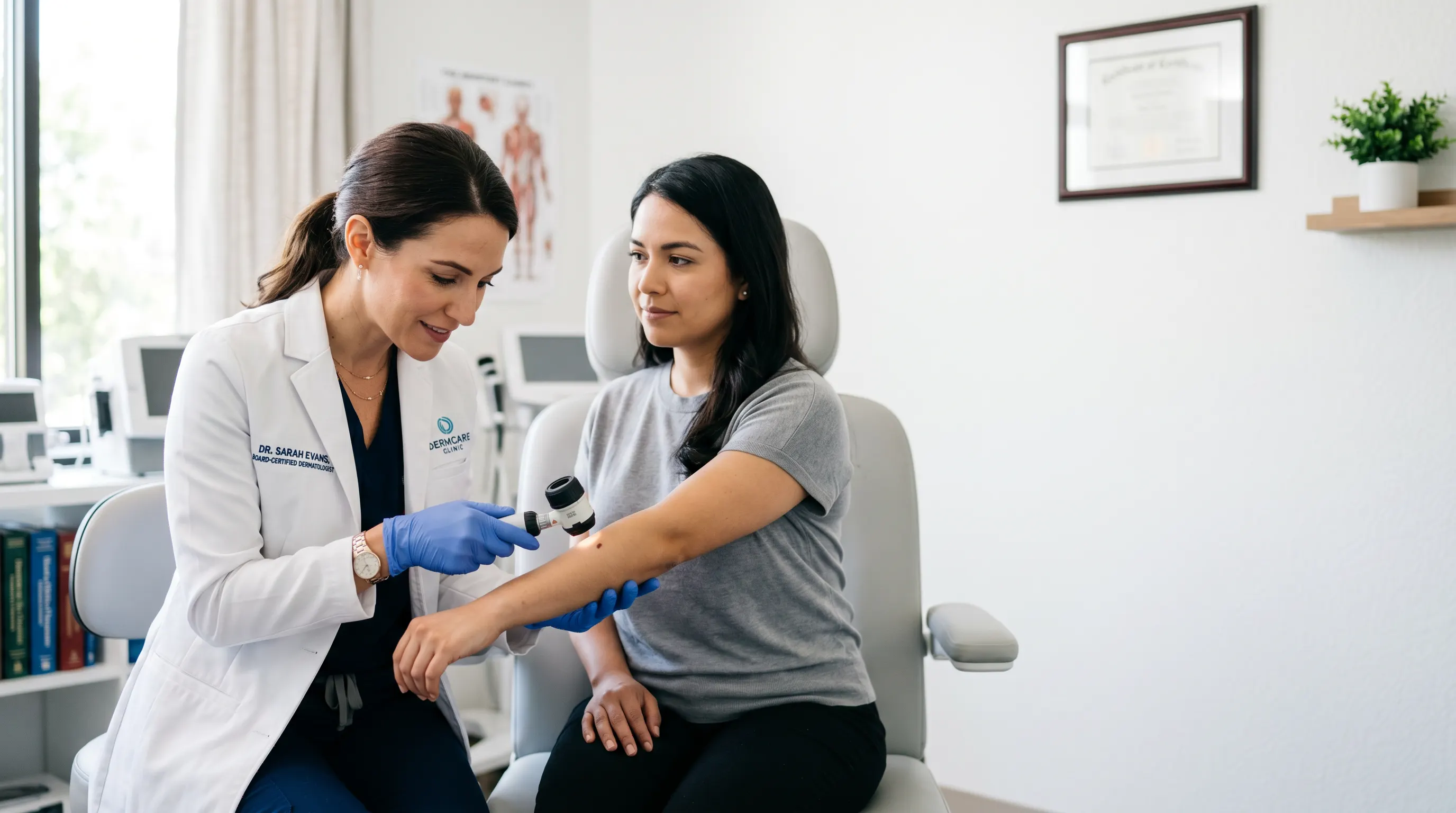
Dermatologists professionals serving Fort Worth, TX
Key Takeaways
•Fort Worth has 19 listed dermatology professionals, with an exceptional average rating of 4.8 out of 5 stars — well above the national average for specialty medical practices.
•The highest-rated practice by score is Fort Worth Dermatology Associates at a perfect 5.0 stars, while Northstar Dermatology leads in patient volume with 2,950 reviews at a 4.9-star rating, offering strong evidence of sustained quality at scale.
Initial consultations in Fort Worth typically run $150–$500, with procedures ranging from $200 for basic treatments up to $5,000 or more for advanced cosmetic or surgical interventions — always confirm whether your visit is billed as a medical or cosmetic appointment, as insurance coverage differs significantly.
•
•Fort Worth's North Texas climate — with intense UV exposure from March through October and dry winter air — creates year-round skin health demands, making it essential to establish a relationship with a dermatologist before problems escalate.
•Every single one of the 19 listed Fort Worth dermatology businesses offers direct phone contact, meaning you can speak with a real person to ask about availability, insurance acceptance, and services before committing to a new patient appointment.
Dermatology in Fort Worth: What You Need to Know
Fort Worth occupies a unique position in the North Texas dermatology landscape. As one of the fastest-growing cities in the United States, the demand for qualified skin care professionals has expanded alongside the population — and the local market has responded with a roster of 19 listed dermatology professionals who collectively maintain a 4.8-star average rating. That figure is not a marketing claim; it is drawn from thousands of real patient reviews across practices serving everything from routine annual skin checks to complex surgical procedures and high-end cosmetic treatments. Fort Worth patients benefit from genuine competition among well-credentialed providers, which tends to hold both quality and pricing more accountable than in smaller or more isolated markets.
The city's climate is one of the defining factors shaping what Fort Worth dermatologists see most. North Texas delivers high ultraviolet index readings for roughly six to seven months of the year, with summers that push triple-digit heat and long periods of direct sun exposure for residents who spend time outdoors at events like the Fort Worth Stock Show, TCU games, or simply commuting and exercising in one of the city's many parks. This climate reality means skin cancer screenings, actinic keratosis management, and sun-damage consultations are not seasonal luxuries here — they are core medical services that local dermatologists are well-practiced in delivering. Simultaneously, the dry winters that characterize North Texas create their own challenges: eczema flares, psoriasis worsening, and chronic dryness conditions spike between November and February when indoor heating further strips moisture from skin. A strong Fort Worth dermatologist will address both ends of this climate spectrum.
For those navigating the market for the first time, understanding the structure of Fort Worth's dermatology community matters. The practices range from high-volume, multi-provider clinics like Northstar Dermatology — which has accumulated nearly 3,000 patient reviews at a 4.9-star rating — to more boutique or specialized offices. Board certification through the American Board of Dermatology (ABD) is the credential to prioritize above all others. Fort Worth's top-listed practices prominently feature ABD-certified physicians, and in some cases, dual-certified providers like those at Key Dermatology, where both Dr. Julie Nguyen and Dr. Sayeeda Ahsanuddin hold FAAD designation (Fellow of the American Academy of Dermatology), indicating advanced peer recognition beyond baseline board certification.
Fort Worth Local Tip: The city's western and suburban corridors — particularly areas around Aledo, Benbrook, and the Alliance corridor — have seen significant population growth, and some dermatology practices in central Fort Worth are managing longer new patient wait times as a result. If you are establishing care for the first time, call ahead and ask specifically about new patient appointment availability. Many Fort Worth practices are booking 4–8 weeks out for new patients, so don't wait until a skin concern becomes urgent to make the call.
How Much Does Dermatology Cost in Fort Worth?
Cost transparency in dermatology is notoriously uneven, and Fort Worth is no exception. What you pay depends heavily on three variables: whether the visit is classified as medical or cosmetic, your insurance situation, and which specific services are performed during your appointment. A standard new patient medical consultation — coming in for a full-body skin exam, an evaluation of a suspicious mole, or management of a diagnosed condition like rosacea or psoriasis — typically falls between $150 and $500 in the Fort Worth market. That range reflects the difference between an in-network visit with a major insurer and an out-of-pocket visit at a premium practice.
Cosmetic dermatology is where costs can climb considerably. Injectables like Botox or dermal fillers, laser resurfacing, chemical peels, and body contouring treatments are rarely covered by insurance and are priced per session. In Fort Worth, you should expect to budget $200 to $500 for entry-level cosmetic treatments and $1,000 to $5,000 or more for procedures like fractional laser resurfacing, Mohs micrographic surgery (for skin cancer), or multi-session laser hair removal packages. Surgical procedures — particularly Mohs surgery, which is widely performed in Texas given the state's high melanoma incidence — can range significantly depending on tumor size, location, and reconstruction complexity. Always request an itemized estimate before any procedure, and ask specifically whether the physician performing your procedure is the same one you consulted with.
Service
Low Estimate
High Estimate
Notes
New Patient Consultation (Medical)
Low$150
High$350
Skin exam, diagnosis, treatment plan; often covered by insurance with copay
Highly variable; multiple sessions often required; ask about package pricing
Money-Saving Tip for Fort Worth Patients: Schedule your annual skin cancer screening in late winter or early spring — before the summer rush hits. Many Fort Worth practices see their highest demand for skin checks between April and August, which can push wait times out and limit your ability to choose your preferred provider. Booking in February or March often means shorter waits, more flexible appointment times, and the practical advantage of catching any sun damage from the previous year before you head back into peak UV season. Also ask about combining a medical skin exam with a cosmetic consultation in a single visit — some practices in Fort Worth offer this, reducing the total number of visits and associated fees.
How to Choose the Right Dermatology Provider in Fort Worth
5 Questions to Ask Before Hiring a Fort Worth Dermatologist
Is the physician board-certified by the American Board of Dermatology (ABD)? The right answer is yes — unequivocally. ABD certification requires completing an accredited residency, passing rigorous written and oral examinations, and maintaining continuing education. In Fort Worth, top-listed practices like Key Dermatology (featuring two FAAD-designated physicians) make this information immediately clear. If a practice is vague about physician credentials or directs most of your care to non-physician providers without clear physician oversight, proceed carefully.
What is the typical wait time for a new patient appointment, and who will I actually see? Fort Worth practices currently average 2–8 weeks for new patient scheduling. The follow-up question matters: in high-volume clinics, new patients are sometimes seen initially by physician assistants or nurse practitioners rather than the dermatologist. This is not inherently problematic, but you deserve a clear answer about when you will see the supervising physician and what the escalation pathway is for complex cases.
Do you accept my insurance, and how do you handle the transition from a medical to cosmetic visit? Some Fort Worth practices operate as hybrid medical-cosmetic offices. Occasionally, a visit that starts as a medical consultation gets partially reclassified in billing. Ask upfront how the practice handles this distinction and request written cost estimates for any procedures discussed during your initial visit.
What is your protocol for skin cancer follow-up and biopsy result communication? The right answer involves a defined, timely process — typically results communicated within 5–10 business days with a clear follow-up plan if findings are abnormal. Given North Texas's high sun exposure rates, your Fort Worth dermatologist should have a well-practiced system for managing biopsy follow-through, not an ad hoc one.
What aftercare and between-visit support do you provide? Strong Fort Worth practices provide written post-procedure care instructions, have a process for reaching clinical staff with questions between appointments, and offer patient portal access for records and messaging. Ask specifically whether the practice uses a patient portal and how after-hours concerns are handled — the answer tells you a great deal about how the practice operates beyond the appointment itself.
Red Flags When Hiring a Dermatologist in Fort Worth
Watch for These Red Flags in Fort Worth Dermatology Practices:
Inability to clearly state physician credentials: If a practice cannot immediately confirm whether its physicians are ABD board-certified, or deflects the question, that is a serious concern. In Fort Worth's competitive market, every reputable practice leads with this information.
Aggressive upselling during medical visits: A dermatologist who pivots quickly from your medical concern to recommending a menu of cosmetic treatments — particularly before completing a thorough examination — may be prioritizing revenue over your actual skin health needs. Cosmetic recommendations are appropriate and common, but they should follow a complete medical evaluation, not replace one.
No clear ownership of your care: In larger Fort Worth practices, it is worth asking who is ultimately responsible for your diagnosis and treatment plan. If the answer is unclear, or if you are shuffled between multiple providers without continuity, the practice structure may not serve complex cases well.
Unusually short appointment slots for new patients: A new patient skin exam — particularly a full-body check — should not be rushed through in 10 minutes. If scheduling staff tells you the new patient visit is 15 minutes or less, ask how that time is structured. Thoroughness in the initial exam is foundational to catching what matters.
Reluctance to provide written cost estimates before procedures: Any Fort Worth dermatology practice performing elective cosmetic procedures should be willing to provide a written cost estimate before you commit. Vagueness about pricing, or pressure to decide on a procedure before leaving the office, are patterns worth noting.
Top-Rated Dermatology Practices in Fort Worth
Among the 19 listed dermatology professionals in Fort Worth, five practices stand out on the basis of both rating and review volume — two metrics that together paint a more complete picture than either one alone. Fort Worth Dermatology Associates holds the highest rating in the local market at a perfect 5.0 stars. With 2 reviews currently on record, this score reflects an early but unblemished patient experience record — worth watching as the practice grows its review base. For patients who value pristine early signals and a potentially more personal practice dynamic, this is a name to investigate directly.
Key Dermatology — led by Dr. Julie Nguyen, MD FAAD and Dr. Sayeeda Ahsanuddin, MD FAAD — earns its 4.9-star rating across 712 reviews, which represents a statistically robust sample. The dual FAAD designations carried by both lead physicians distinguish this practice: FAAD status requires active ABD board certification plus peer nomination through the American Academy of Dermatology, signaling a physician who is both technically qualified and professionally engaged in the field. For patients dealing with complex medical dermatology cases or those who prioritize physician-level credentialing over practice size, Key Dermatology warrants serious consideration.
Keehan Dermatology also sits at 4.9 stars with 781 reviews — a strong and consistent showing that suggests reliable quality across a significant patient volume. Northstar Dermatology is the volume leader in Fort Worth's dermatology market with 2,950 reviews at a 4.9-star rating. Maintaining near-perfect scores at that scale is genuinely difficult and points to strong systems, consistent clinical quality, and effective patient experience management. For patients who value demonstrated track record at scale and likely shorter wait times due to multi-provider capacity, Northstar Dermatology is among the most data-supported choices in the city. Rounding out the top five, Dermatology Specialists of Fort Worth, PLLC holds a 4.9-star rating across 1,069 reviews — another high-volume, high-quality option with over a thousand data points supporting its standing.
Company
Rating
Reviews
Best For
Fort Worth Dermatology Associates
5.0★
2
Patients seeking a top-rated, likely boutique practice with a perfect early track record; ideal for those who prefer a smaller, more personal practice environment
Patients prioritizing dual FAAD-credentialed physicians and high-quality medical dermatology; strong for complex skin conditions and patients who want specialist-level physician oversight
Keehan Dermatology
4.9★
781
Patients looking for a consistently well-reviewed mid-size practice with a solid patient volume track record across general and specialty dermatology services
Northstar Dermatology
4.9★
2,950
Patients who value the highest volume of independently-rated reviews in the Fort Worth market; strong evidence of sustained quality at scale; likely good capacity for new patients
Dermatology Specialists of Fort Worth, PLLC
4.9★
1,069
Patients seeking a well-established practice with over a thousand reviews supporting its rating; a reliable choice for both medical and cosmetic dermatology services
Seasonal Guide for Fort Worth Dermatology
Fort Worth's climate creates a distinctly cyclical pattern of dermatology demand that smart patients can use to their advantage. Understanding when practices are busiest — and what conditions tend to emerge in each season — helps you plan care proactively rather than reactively.
Spring (March–May) is the single most important window for scheduling your annual skin cancer screening in Fort Worth. UV index levels begin climbing sharply in March, and North Texas transitions quickly from mild to intense sun exposure. This is also when Fort Worth residents resume outdoor activities — attending events at the Will Rogers Memorial Center, running trails in Trinity Park, working in gardens, and attending outdoor festivals. Dermatology practices see a surge in screening appointments from late March through May, so booking early in this window, or ideally in February, gives you the best access. This is also when actinic keratoses (pre-cancerous lesions) from the prior year are most commonly identified and treated.
Summer (June–August) represents peak sun damage season in Fort Worth. Temperatures regularly exceed 100°F, and UV exposure is extreme. Dermatologists in Fort Worth see an increase in sunburn-related visits, heat-aggravated rosacea flares, and patients seeking evaluation of rapidly changing moles or skin spots noticed during swimwear season. If you identify a concerning lesion during summer, do not delay calling — most reputable practices will prioritize potentially suspicious lesion evaluations even during busy periods.
Fall (September–November) is prime season for cosmetic dermatology procedures in Fort Worth. Reduced sun exposure, cooler temperatures, and the practical reality that recovery from laser resurfacing, chemical peels, or other light-sensitive treatments is safer and more comfortable make this the preferred window for patients pursuing aesthetic improvements. Many Fort Worth practices run structured cosmetic treatment schedules that front-load procedures in the fall, with results fully settled by the winter holiday season. If you are considering a cosmetic procedure, booking your fall consultation in August or early September puts you ahead of the seasonal demand curve.
Winter (December–February) brings its own dermatology challenges specific to North Texas. The region's dry winters — with low humidity and heavy indoor heating use — are a reliable trigger for eczema flares, psoriasis worsening, severely dry and cracking skin, and seborrheic dermatitis. Fort Worth patients with known chronic skin conditions should schedule a winter check-in or at minimum call their dermatologist in early December to ensure their management plan is updated for the cold season. This is also the quietest period for new patient scheduling, meaning waits are typically shorter and appointment times are more flexible.
Back-to-school season (late August–September) is a consistent driver of acne consultations in Fort Worth, as teenagers and young adults experience hormonal and stress-driven acne flares around the return to school. Families with teenagers should anticipate this and schedule acne consultations in July or early August to avoid the late-August rush and ensure any prescription treatments have time to begin working before the school year is fully underway.
Frequently Asked Questions
How long does it take to get a new patient appointment with a Fort Worth dermatologist?
For most Fort Worth dermatology practices, new patient appointments are currently booking 2–8 weeks out. Practices with higher review volumes — like Northstar Dermatology with nearly 3,000 reviews — often have multi-provider teams that can offer more scheduling flexibility. If your concern is potentially urgent (a rapidly changing mole, a lesion that bleeds or doesn't heal, a severe skin reaction), call the practice directly and describe your symptoms — most reputable Fort Worth practices will triage urgent medical concerns and fit you in more quickly than the standard new patient window. Cosmetic consultations often have shorter wait times than medical appointments, so if your concern spans both, be sure to clarify the nature of your visit when you call.
What does it mean that a Fort Worth dermatologist is FAAD-designated, versus simply board-certified?
Board certification through the American Board of Dermatology (ABD) is the baseline credential — it means the physician completed an accredited dermatology residency and passed standardized examinations. FAAD (Fellow of the American Academy of Dermatology) goes a step further: it requires active board certification plus election by peers within the AAD, recognizing professional contribution and engagement within the specialty. Key Dermatology in Fort Worth is a notable example, with both Dr. Julie Nguyen and Dr. Sayeeda Ahsanuddin holding FAAD designation. For patients managing complex medical skin conditions or seeking the highest level of physician credentialing, FAAD status is a meaningful differentiator worth asking about when evaluating practices.
Find Dermatologists Professionals in Fort Worth
Browse top-rated contractors, compare reviews, and get free quotes.
Does insurance cover dermatology visits in Fort Worth, and how do I know what I'll owe?
Medical dermatology visits — including skin cancer screenings, treatment of diagnosed conditions like eczema, psoriasis, acne, or rosacea, and biopsies — are typically covered by major health insurance plans, subject to your deductible and copay. Cosmetic dermatology procedures (Botox, fillers, laser resurfacing, chemical peels for aesthetic purposes) are almost universally excluded from insurance coverage. The gray area lies in visits that have both medical and cosmetic components — for example, a visit addressing a medical condition where cosmetic options are also discussed. Always ask the practice upfront how they code your visit, confirm your insurance coverage before the appointment, and request a written cost estimate for any procedures before you agree to them. All 19 listed Fort Worth dermatology practices offer direct phone contact, so you can call ahead and ask specific billing and insurance questions before your appointment.
How often should Fort Worth residents get a full-body skin cancer screening?
For most adults in Fort Worth, a full-body skin exam once per year is appropriate given North Texas's high UV environment. The American Academy of Dermatology recommends annual screenings for adults with risk factors including fair skin, a history of sunburns, a personal or family history of skin cancer, use of tanning beds, or a large number of moles. Fort Worth residents who spend significant time outdoors — given the city's culture of outdoor events, sports, and activities — should err toward annual screenings rather than waiting for a visible concern to develop. Skin cancers caught early are overwhelmingly treatable; melanoma caught late is not. Spring is the ideal time to schedule your annual exam in Fort Worth, before peak UV season begins in earnest.
What should I bring to my first dermatology appointment in Fort Worth?
Come prepared with: your insurance card and a photo ID; a list of all current medications and supplements (some medications increase photosensitivity or interact with topical treatments); a brief history of any skin conditions you have had treated in the past, including any biopsies and their results; photographs of any lesions or rashes you have noticed at home that may not be visible at the time of your appointment (skin conditions can change day to day, and photos provide important context); and any family history of skin cancer or hereditary skin conditions. If you are scheduling a full-body skin exam, avoid nail polish on fingers and toes, and come with makeup-free skin if possible so the physician can evaluate all surfaces without interference. Fort Worth practices that offer patient portals — which is increasingly common — may allow you to upload this information before your visit, reducing time spent on intake paperwork.