•Phoenix has 20 listed dermatology professionals with an exceptional average rating of 4.8 out of 5 stars — well above the national average for medical specialty practices.
•Regency Dermatology leads all Phoenix providers with a perfect 5.0-star rating across 851 reviews, making it the highest-rated dermatology practice in the metro area.
•Phoenix's extreme UV index and year-round sun exposure make skin cancer screenings a non-negotiable annual priority — not an optional wellness add-on.
•Consultation costs in Phoenix run $150–$500 and procedures range from $200 to $5,000+, with cosmetic procedures typically booked in fall and winter when patients can recover indoors away from intense sun.
•All 20 listed Phoenix dermatology businesses offer direct phone contact, meaning you can always speak with a real person rather than navigating a portal — critical when dealing with urgent skin concerns.
Dermatology in Phoenix: What You Need to Know
Phoenix is not a typical American city when it comes to dermatology needs. With a population of 1.6 million people baking under one of the highest UV indexes in the continental United States, skin health here is a genuine medical priority rather than a cosmetic afterthought. The Sonoran Desert receives more than 300 days of sunshine per year, and summer UV readings routinely hit extreme levels — the kind of cumulative sun exposure that accelerates photoaging, increases actinic keratosis formation, and raises melanoma risk significantly above national averages. Add in Phoenix's status as the fastest-growing metro in the country, with tens of thousands of new residents arriving annually from less sun-intensive climates, and you have a population that is particularly vulnerable and often underprepared for what desert sun actually does to skin over time.
The local dermatology market reflects that demand. The 20 listed professionals in Phoenix carry an average rating of 4.8 out of 5 stars — a figure that signals both strong consumer satisfaction and a competitive, quality-driven market. The top five practices by rating all sit at 4.9 stars or above, with Medical Dermatology Specialists Phoenix amassing an extraordinary 2,373 reviews at 4.9 stars, and Southwest Skin Specialists Phoenix Tatum Blvd accumulating 1,697 reviews at the same rating. These are not small sample sizes — they represent thousands of real patient experiences across a wide range of services from medical dermatology to cosmetic procedures. When you see consistent high ratings at high volume, it tells you these practices have built reliable systems and patient-first cultures. Phoenix residents, in general, are well-served by their local dermatology options, but choosing the right provider for your specific needs still requires careful evaluation.
Phoenix's climate also creates some unusual seasonal dynamics in dermatology demand. The monsoon season (roughly July through September) brings humidity spikes and flooding that can trigger fungal skin conditions and contact dermatitis from soil exposure. The brutal summer heat — with temperatures regularly exceeding 115°F — stresses the skin barrier, worsens rosacea, and can cause heat rash in children and adults alike. Meanwhile, the dry desert air during winter months depletes the skin's moisture barrier rapidly, making eczema flares and xerosis common complaints from October through February. Understanding these seasonal patterns is essential both for timing your appointments strategically and for knowing which type of dermatologist — general medical, surgical, or cosmetic — is best positioned to address your particular condition.
Phoenix Local Tip: The Arizona Department of Health Services reports that Arizona consistently ranks among the top states for melanoma incidence. If you moved to Phoenix from a northern state within the last five years, schedule a baseline full-body skin exam immediately regardless of your age — don't wait for a suspicious spot to appear. Many Phoenix dermatologists offer new-patient skin cancer screening appointments specifically designed for recent transplants.
How Much Does Dermatology Cost in Phoenix?
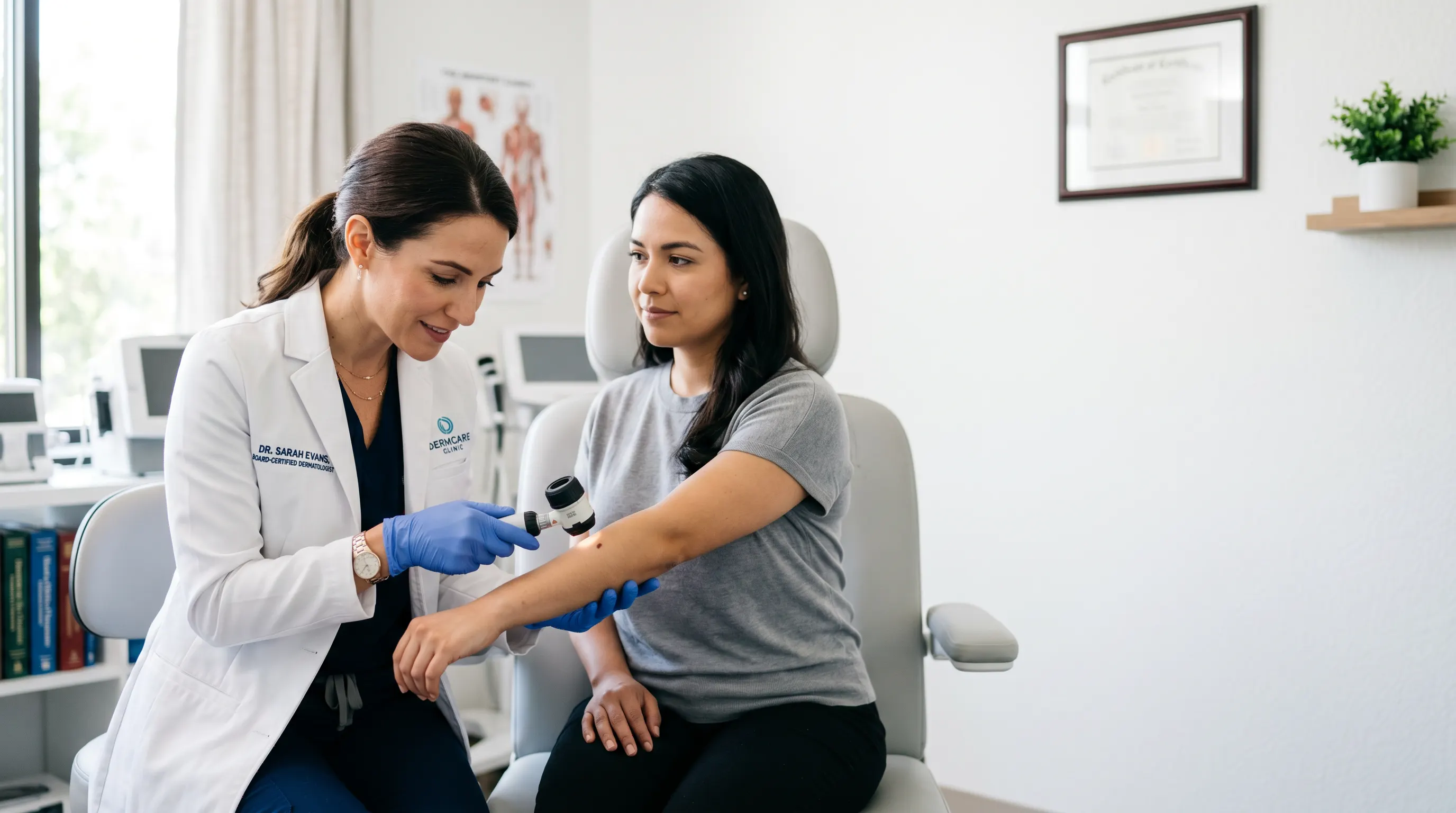
Dermatology costs in Phoenix follow the national range but are shaped by local factors including high demand from a sun-exposed population, the concentration of medically complex cases requiring advanced procedures, and a cosmetic dermatology market driven by the city's active outdoor lifestyle culture. A standard new-patient consultation runs $150–$500 depending on whether you are seeing a physician assistant, nurse practitioner, or board-certified dermatologist (ABD). Expect the higher end of that range at practices that include a full-body skin mapping examination or dermoscopy as part of the intake process — both of which are worth the premium in a high-UV environment like Phoenix.
Procedure costs vary enormously based on complexity. A simple cryotherapy session to remove actinic keratoses — extremely common in Phoenix given cumulative sun damage — runs on the lower end. Mohs micrographic surgery for skin cancer, which Phoenix practices perform at high volume due to local incidence rates, can reach several thousand dollars depending on the size and location of the lesion. Cosmetic procedures like laser resurfacing, injectable neurotoxins, and filler treatments sit in the mid-to-high range and are typically not covered by insurance. Phoenix's cosmetic dermatology market benefits from strong competition among quality providers, which creates pricing pressure that tends to keep costs more reasonable than comparable markets like Scottsdale's luxury medical corridor. Always request an itemized estimate before any procedure and clarify what follow-up visits are included in the quoted price.
Service
Low Estimate
High Estimate
Notes
New Patient Consultation
Low$150
High$500
Higher end includes full-body skin mapping and dermoscopy; essential for Phoenix sun-damage assessment
Skin Cancer Screening & Biopsy
Low$200
High$800
Biopsy adds cost; Phoenix's high melanoma incidence makes annual screening a medical necessity, not a luxury
Mohs Surgery (Skin Cancer Removal)
Low$1,000
High$5,000+
Cost scales with lesion size, location, and stages required; most major Phoenix practices perform this in-office
Best scheduled October–February in Phoenix to allow post-procedure recovery away from peak UV; often bundled for savings
Phoenix Money-Saving Tip: Schedule cosmetic dermatology procedures between October and February. Phoenix practices frequently offer promotional pricing during the fall and winter months when demand for cosmetic work peaks and competition for appointment slots intensifies. Post-procedure sun avoidance — critical for optimal healing — is also far more manageable when you are not navigating 115°F summers. Additionally, ask practices whether they offer bundled pricing if you are combining a medical skin exam with a cosmetic consultation on the same visit — many Phoenix providers will discount the cosmetic portion when a medical appointment is already booked.
How to Choose the Right Dermatology
5 Questions to Ask Before Hiring
Is the dermatologist board-certified by the American Board of Dermatology (ABD)? The right answer is yes — ABD certification requires completion of an accredited residency program and passing a rigorous examination. In Phoenix, where you need someone competent to evaluate sun-damaged skin and identify early-stage melanoma, this credential is non-negotiable. Physician assistants and nurse practitioners can provide excellent care but should always be supervised by a board-certified dermatologist on-site.
What is your average wait time for a new patient appointment, and do you have a cancellation list? The right answer is a clear, honest timeframe — typically 2 to 8 weeks for a standard appointment in Phoenix, with a cancellation list available for urgent concerns. Practices that cannot give you a direct answer or that quote waits beyond 10 weeks without offering alternatives may be understaffed relative to their patient load.
Do you perform Mohs surgery in-office, or do you refer out for skin cancer treatment? The right answer depends on your situation, but practices that handle Mohs in-house generally offer faster treatment timelines and better care continuity — important in Phoenix where basal cell carcinoma and squamous cell carcinoma cases are abundant. If a practice refers all surgical cases to a separate surgeon, understand that referral pathway clearly before committing.
How do you handle urgent concerns between appointments — for example, a rapidly changing mole or a severe allergic reaction? The right answer is a clear protocol: a dedicated phone line, same-day or next-day urgent slots, or a telehealth option for triage. All 20 listed Phoenix practices offer direct phone contact, so any provider worth choosing should be reachable by a real human being during business hours without you navigating endless automated menus.
What is your experience treating skin conditions common in Phoenix specifically — including actinic keratoses, heat rash, sun-induced hyperpigmentation, and monsoon-related fungal infections? The right answer demonstrates genuine local clinical experience, not a generic response. A Phoenix dermatologist who has practiced here for several years will have a fundamentally different clinical vocabulary around sun damage than someone who trained in a northern state and relocated recently.
Red Flags When Hiring Dermatology
Red Flags to Watch For When Choosing a Phoenix Dermatologist:
No board certification displayed or easily confirmed — any practice that cannot clearly point you to ABD certification for the supervising physician should be approached with serious skepticism. In Arizona, the medical board's license lookup tool lets you confirm credentials in under two minutes.
Pressure to purchase a full cosmetic treatment package at or immediately after your first visit — reputable Phoenix dermatologists perform a thorough medical evaluation before recommending elective cosmetic procedures. High-pressure upselling at intake is a sign of a sales-driven, not patient-driven, practice.
Unusually low pricing on procedures like Mohs surgery or laser treatments without a clear explanation — dermato-surgical procedures require specialized training, proper facilities, and quality equipment. Prices dramatically below the $200–$5,000+ range without explanation may indicate unlicensed personnel, substandard equipment, or bait-and-switch billing practices.
No clear sun-damage or skin cancer screening protocol for new patients — in Phoenix, any dermatologist who does not ask about your sun exposure history, history of sunburns, or family history of melanoma during a new patient visit is missing a critical clinical step. This is not optional in the Sonoran Desert.
Reviews that mention repeated scheduling failures, difficulty reaching the office by phone, or long waits without communication — given that all 20 listed Phoenix practices maintain direct phone contact, there is no excuse for a modern dermatology practice to be unreachable. Patient experience problems of this nature often indicate systemic staffing or management issues that affect clinical care quality too.
Top-Rated Dermatology in Phoenix
Among the 20 listed dermatology professionals in Phoenix, five practices rise clearly to the top when measured by both rating quality and review volume — a combination that matters far more than either metric alone. A 5.0-star rating with 10 reviews is statistically meaningless; a 4.9-star rating with over 2,000 reviews represents a genuine signal of consistent, sustained excellence.
Regency Dermatology holds the top position in Phoenix with a perfect 5.0-star rating across 851 reviews — the only practice in the city to achieve a flawless rating at that scale of patient feedback. A 5.0 at 851 reviews is extraordinarily rare in medical practice ratings, where even the best providers typically encounter some degree of variation. This makes Regency Dermatology the standout recommendation for patients who prioritize the highest possible standard of rated care and want the statistical confidence that comes with a large, high-quality review sample.
Medical Dermatology Specialists Phoenix commands the largest review base of any practice in the city — 2,373 reviews at 4.9 stars. Volume of this magnitude means the rating has been stress-tested by more patient experiences than any competing practice, and its consistent near-perfect score across that base speaks to deeply embedded quality systems. This is likely the right choice for patients who want a high-volume, systematically organized practice with proven processes for managing complex caseloads.
Southwest Skin Specialists Phoenix Tatum Blvd (4.9 stars, 1,697 reviews) and Epiphany Dermatology (4.9 stars, 1,105 reviews) represent strong alternatives with exceptional review bases, each exceeding 1,000 patient reviews at near-perfect ratings. Desert Valley Dermatology rounds out the top five at 4.9 stars with 553 reviews, a smaller but still highly meaningful sample that signals a focused, quality-first practice environment. Together, these five practices represent the tier of Phoenix dermatology where a patient is extremely unlikely to receive substandard care.
Company
Rating
Reviews
Best For
Regency Dermatology
5.0★
851
Patients seeking the highest-rated provider in Phoenix with a perfect score; ideal for those who want statistically exceptional care quality with a strong review base to support it
Medical Dermatology Specialists Phoenix
4.9★
2,373
Patients who want the most-reviewed practice in the city — the largest patient feedback base in Phoenix dermatology means their 4.9-star rating is the most statistically robust; strong for complex medical dermatology cases
Southwest Skin Specialists Phoenix Tatum Blvd
4.9★
1,697
Patients on the north side of Phoenix looking for a high-volume, highly rated practice with excellent accessibility; strong review volume indicates consistent operational quality across a broad patient population
Epiphany Dermatology
4.9★
1,105
Patients seeking a practice with over 1,000 reviews confirming 4.9-star quality; well-suited for those who want a balance of strong clinical reputation and manageable practice scale
Desert Valley Dermatology
4.9★
553
Patients who prefer a smaller, boutique-style practice environment with a strong 4.9-star track record; ideal for those who value a more personalized appointment experience without sacrificing rating quality
Seasonal Guide for Phoenix
Phoenix's dermatology calendar is unlike any other major American city, driven entirely by the rhythm of desert climate extremes. Understanding when to schedule which type of care can meaningfully improve both clinical outcomes and patient experience.
Spring (March–May) is peak skin cancer screening season in Phoenix. As temperatures climb from pleasant to hot, dermatology practices fill rapidly with patients who spent the winter outdoors hiking Camelback Mountain and South Mountain, accumulated new sun exposure, and are motivated to get a baseline check before summer becomes unbearable. If you are scheduling an annual full-body skin exam, book in January or February to secure a March or April appointment — waiting until April to book will often push your appointment into June or later. Actinic keratoses discovered during spring screenings should be treated promptly; leaving them through a Phoenix summer without treatment increases risk of progression.
Summer (June–September) brings the most medically complex skin presentations in Phoenix. Extreme heat triggers heat rash (miliaria) in children and adults who are not adequately cooling, and patients with rosacea experience significant flares due to the thermal load on facial vasculature. The monsoon season, arriving in July, introduces a humidity component that creates ideal conditions for tinea versicolor and other fungal skin infections — particularly in people who are sweating heavily during outdoor activity. This is also the period when sun-damaged skin is being most aggressively assaulted, making SPF 50+ and protective clothing a clinical recommendation, not a lifestyle suggestion. Expect longer wait times for urgent appointments during this period as demand spikes.
Fall (October–November) is the ideal window for initiating cosmetic dermatology treatments. The UV index drops significantly, outdoor temperatures become tolerable, and patients can realistically protect treated skin from sun exposure during the critical post-procedure healing period. Laser resurfacing, chemical peels, photodynamic therapy for sun damage, and fractional laser treatments for hyperpigmentation are all best scheduled beginning in October. The city's cosmetic dermatology market is highly active during this window, so practices may offer competitive pricing — but book early, as the best appointment slots at top-rated practices fill within days of becoming available.
Winter (December–February) is the low point for medical skin emergencies but the high point for elective cosmetic procedures and injectable treatments. Phoenix's dry winter air accelerates transepidermal water loss, making eczema, psoriasis, and xerosis significantly worse for susceptible patients — anyone with a history of these conditions should proactively schedule a winter check-in rather than waiting for a flare to become severe. This is also the optimal time for new arrivals to Phoenix to establish care with a dermatologist before their first full desert summer, as new-patient wait times are generally shorter during the winter months than any other time of year. Back-to-school season in August and September reliably produces acne surges in adolescents, driven by stress, dietary changes, and hormonal fluctuation — parents should anticipate a 4–8 week new patient wait if seeking treatment for a teenager and book accordingly in late June or early July.
Frequently Asked Questions
How long will I wait for a new patient appointment at a Phoenix dermatology practice?
For a standard new patient appointment at a top-rated Phoenix practice, expect a wait of 2 to 8 weeks. This range reflects the high demand driven by Phoenix's sun-intensive environment and rapidly growing population. The shorter end of the range is typically available at larger, high-volume practices like Medical Dermatology Specialists Phoenix, which has the systems to process a higher patient throughput. The longer end is more common at boutique practices or during peak spring and summer screening seasons. If you have a suspicious lesion or rapidly changing mole, call directly — all 20 listed Phoenix practices have direct phone contact, and most maintain urgent or same-week slots for medically acute concerns that are not advertised online. Never wait 8 weeks to have a suspicious spot evaluated.
What credentials should I look for in a Phoenix dermatologist?
The essential credential is board certification from the American Board of Dermatology (ABD). This requires completing a three-year accredited dermatology residency following medical school and passing comprehensive written and practical examinations. In Arizona, you can confirm a physician's license and board certification status through the Arizona Medical Board's online license lookup tool. For surgical dermatology, particularly Mohs micrographic surgery, look additionally for fellowship training through the American College of Mohs Surgery (ACMS). Many top Phoenix practices also employ dermatology physician assistants (PA-C) and nurse practitioners (NP) who provide excellent clinical care — these providers should always be supervised by an on-site or readily available board-certified dermatologist. Asking directly about the supervising physician and their availability is entirely appropriate.
Find Dermatologists Professionals in Phoenix
Browse top-rated contractors, compare reviews, and get free quotes.
Is skin cancer screening covered by insurance in Phoenix?
Insurance coverage for skin cancer screening in Phoenix depends heavily on your specific plan and the clinical context of the visit. A full-body skin exam conducted as part of a medical visit for a specific complaint — a changing mole, a bleeding lesion, a new growth — is generally covered as a diagnostic service. Purely preventive full-body screening without a specific concern is less consistently covered and may require you to pay the consultation fee out of pocket, which runs $150–$500 at most Phoenix practices. Given Arizona's documented elevated melanoma rates, some insurance plans do cover annual skin cancer screening — call your insurer directly to clarify before booking. If cost is a barrier, the American Academy of Dermatology sponsors free SPOTme skin cancer screening events periodically in the Phoenix metro area. Biopsy costs, if a suspicious lesion is found, are almost universally covered under diagnostic billing codes once a pathological concern has been identified.
What is the best time of year to get cosmetic dermatology procedures done in Phoenix?
October through February is definitively the best window for cosmetic dermatology procedures in Phoenix. The reasoning is both clinical and practical. Post-procedure skin — whether after laser resurfacing, a chemical peel, photodynamic therapy, or any ablative treatment — is acutely vulnerable to UV damage, and exposing treated skin to Phoenix's extreme summer UV index significantly increases the risk of post-inflammatory hyperpigmentation, prolonged redness, and suboptimal healing. Fall and winter allow patients to genuinely protect their skin during the critical healing period without being trapped indoors in extreme heat. Additionally, practices often run promotional pricing during this high-demand cosmetic season. The tradeoff is that appointment availability at top-rated practices fills faster in fall and winter — book your consultation in September to secure October and November procedure slots at practices like Regency Dermatology or Southwest Skin Specialists.
How do I know if a dermatologist in Phoenix is actually high quality, beyond just reading reviews?
Review ratings are a strong starting signal — the fact that Phoenix's 20 listed professionals average 4.8 stars, with the top five all at 4.9 or above, tells you this is a genuinely high-quality market. But reviews should be cross-referenced with verifiable credentials. First, confirm ABD board certification through the American Board of Dermatology's public directory or the Arizona Medical Board's license portal — this takes two minutes and is the most important check you can make. Second, evaluate review volume alongside rating: a 4.9-star rating backed by 2,373 reviews (Medical Dermatology Specialists Phoenix) tells you far more than a 5.0 rating from 12 reviews. Third, assess whether the practice publishes detailed information about their providers' training, subspecialty areas, and procedural capabilities — transparency about credentials is a strong positive signal. Finally, pay attention to how the practice communicates at first contact: is the phone answered by a knowledgeable human, are your questions answered directly, is the appointment scheduling process clear and organized? A practice that is excellent clinically is also usually excellent operationally.