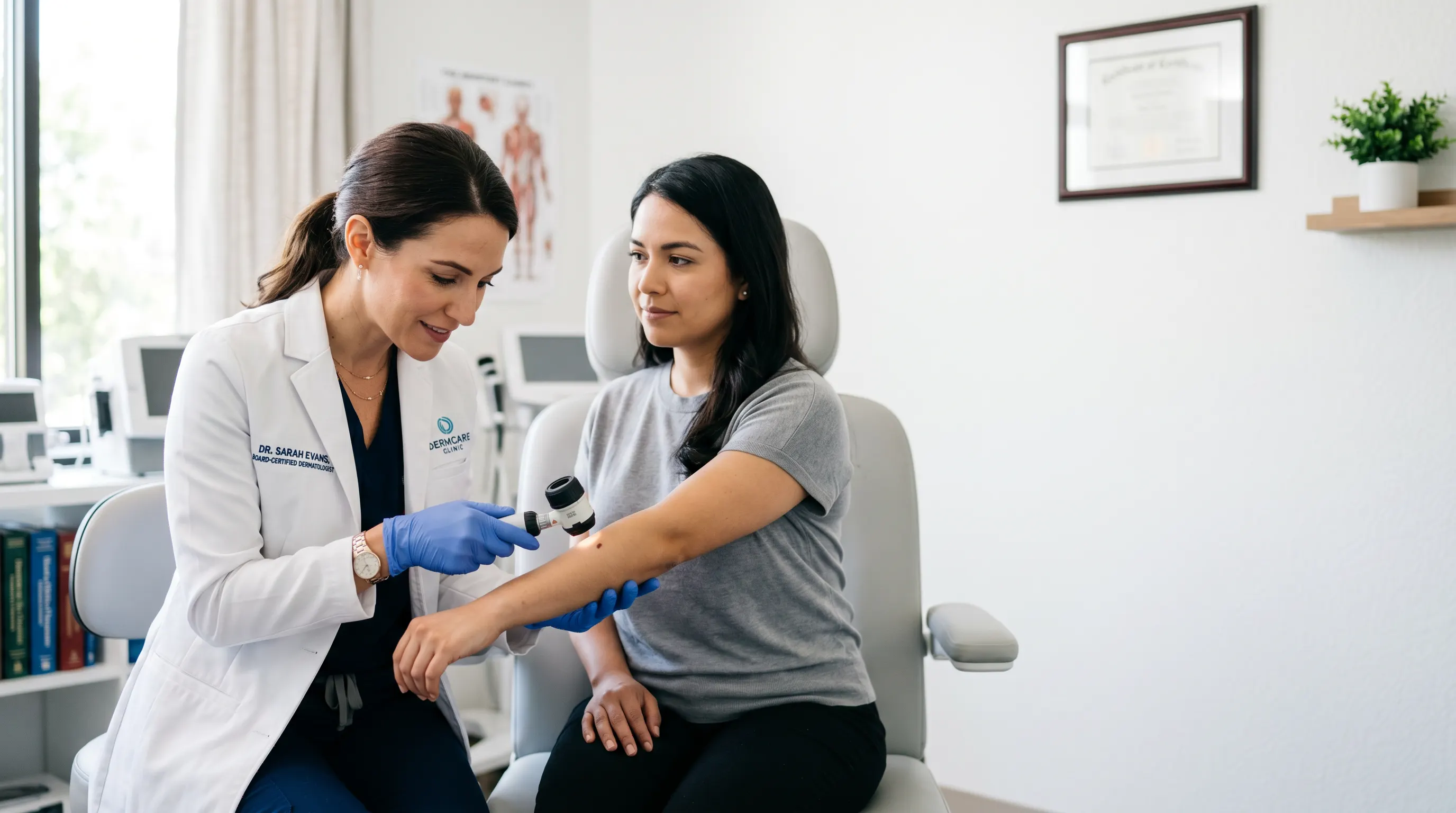
Dermatologists professionals serving San Antonio, TX
Key Takeaways
•San Antonio has 20 listed dermatology professionals with an impressive average rating of 4.8 out of 5 stars, indicating a consistently high standard of care across the market.
•Dermatology San Antonio dominates the top ratings with multiple locations each holding a 4.9-star rating and thousands of patient reviews — one location has accumulated over 2,852 reviews, signaling exceptional patient volume and satisfaction.
San Antonio's hot semi-arid climate means UV exposure is a year-round threat, making annual skin cancer screenings not optional but essential — especially for the city's large military population who spend significant time outdoors.
•
•Consultation costs in San Antonio typically run $150–$500, with procedures ranging from $200 to over $5,000 depending on complexity — always confirm what is included in your first visit before booking.
•All 20 listed dermatology businesses in San Antonio offer direct phone contact, meaning you can speak to a real person when scheduling — a significant advantage when navigating new patient waitlists of 2 to 8 weeks.
Dermatology in San Antonio: What You Need to Know
San Antonio sits in a hot semi-arid climate zone where average summer temperatures regularly exceed 95°F and UV index readings rank among the highest in the continental United States for much of the year. For the city's 1.5 million residents — including a disproportionately large active-duty and veteran military population stationed at Joint Base San Antonio — this is not an abstract risk. Soldiers, airmen, and civilian support staff spend years accumulating occupational sun exposure, and dermatologists in San Antonio see the downstream consequences: higher-than-average rates of actinic keratosis, squamous cell carcinoma, and melanoma presenting in relatively young patients. If you are new to the city or have not had a full-body skin exam in the past twelve months, scheduling one should be your first priority. The good news: San Antonio's dermatology market is robust, with 20 listed professionals averaging a 4.8-star rating — a benchmark that speaks to genuine clinical quality, not just marketing effort.
Beyond sun-related concerns, San Antonio's tourism economy shapes the cosmetic dermatology landscape in notable ways. The city draws millions of visitors annually and has a thriving hospitality and service industry where appearance-conscious professionals drive consistent demand for cosmetic procedures including botulinum toxin injections, dermal fillers, laser resurfacing, and chemical peels. Local practices have responded by offering full-spectrum care — from medical dermatology and Mohs surgery for skin cancer to aesthetic treatments — under one roof. This means San Antonio residents have access to highly experienced cosmetic dermatologists who perform high procedure volumes, which directly correlates with better outcomes. When evaluating providers, look for practices that handle both medical and cosmetic cases; the clinical rigor of medical dermatology makes for more precise, safer cosmetic work.
The market is also defined by several multi-location group practices, most notably Dermatology San Antonio, which appears across multiple listings each carrying a 4.9-star rating and review counts ranging from over 1,500 to nearly 2,900. This volume of patient feedback is statistically meaningful — a 4.9-star rating sustained across thousands of reviews is not a fluke. It reflects systemized patient care, efficient scheduling, and consistent clinical outcomes. For patients, this means that choosing a large, rated group practice in San Antonio often reduces the risk of a one-off bad experience that can occur with smaller single-physician offices. That said, boutique practices like Sonterra Dermatology on Broadway (4.9 stars, 1,060 reviews) offer a more personalized care model that appeals to patients who prefer continuity with a single physician.
San Antonio Local Tip: Because JBSA is one of the largest military installations in the world, many local dermatology practices have staff experienced with TRICARE billing. If you are active-duty, a veteran, or a dependent, ask specifically whether the practice accepts your TRICARE plan variant before booking — this can save you hundreds of dollars and avoid out-of-network surprises. Some practices near the medical center corridor on Floyd Curl Drive also have established referral pathways with military healthcare providers.
How Much Does Dermatology Cost in San Antonio?
Dermatology costs in San Antonio generally align with national averages but are influenced by several local factors. The concentration of multi-location group practices creates some price competition that keeps consultation fees reasonable — typically $150 to $500 for an initial visit depending on visit complexity, whether a biopsy is taken, and the type of practice (academic-affiliated, private group, or boutique cosmetic). However, San Antonio also has a robust medical tourism segment driven by its convention and tourism infrastructure, which means high-end cosmetic practices can command premium pricing comparable to Austin or Dallas.
Insurance coverage is a critical variable. Medical dermatology services — skin cancer screenings, biopsies, acne treatment, psoriasis management, eczema, rosacea — are typically covered by major carriers including BCBS of Texas, Aetna, Cigna, and United Healthcare, which have strong networks in San Antonio. Cosmetic procedures (Botox, fillers, laser resurfacing, chemical peels for aesthetic purposes) are almost universally out-of-pocket. The distinction matters because a practice that advertises 'free consultations' for cosmetic work may charge a facility fee or charge separately for the physician's assessment. Always ask for an itemized cost estimate before committing to any procedure.
Service
Low Estimate
High Estimate
Notes
Initial Consultation / Skin Exam
Low$150
High$300
Full-body skin cancer screenings may be covered by insurance; confirm before booking. Cash-pay rates vary by practice type.
Skin Biopsy (shave, punch, or excisional)
Low$200
High$800
Cost varies significantly based on size, depth, and whether pathology is in-house or sent to external lab. Pathology fees are typically billed separately.
Mohs Micrographic Surgery
Low$1,000
High$3,500
Stage-dependent pricing; most insurance covers Mohs for confirmed skin cancers. San Antonio has multiple Mohs-trained surgeons — confirm board certification in Mohs surgery specifically.
Entirely out-of-pocket. Botox typically $12–$18 per unit in San Antonio; full-face laser resurfacing and combination treatment plans reach $3,000–$5,000+. Fall and winter are peak seasons for discounts.
Money-Saving Tip for San Antonio Patients: Many San Antonio dermatology practices offer cosmetic procedure package pricing in the fall (October through December) when demand for laser treatments, chemical peels, and resurfacing surges because patients want to heal before the high-UV summer months. Booking cosmetic consultations in September or October — before the holiday rush — often unlocks promotional pricing and better appointment availability. Additionally, pharmaceutical manufacturer patient assistance programs for prescription dermatology medications (biologics for psoriasis, topical retinoids) are widely accepted by San Antonio practices; ask your provider's billing coordinator specifically about manufacturer copay cards, which can reduce out-of-pocket costs for brand-name drugs from hundreds to as little as zero dollars per month.
How to Choose the Right Dermatology
5 Questions to Ask Before Hiring a San Antonio Dermatologist
Are you board-certified by the American Board of Dermatology (ABD)? The right answer is yes — ABD certification requires passing rigorous written and clinical exams after completing an accredited residency. In Texas, any licensed physician can legally perform dermatology services, so board certification is the primary credential separating trained dermatologists from practitioners with limited skin care training. Do not accept 'board-eligible' as a substitute for active certification.
What is your experience with skin cancer detection and Mohs surgery, and do you perform Mohs in-house or refer out? For San Antonio patients — given the UV burden of the local climate — you want a practice that treats skin cancer as a core competency, not an afterthought. The right answer is that the physician performs or directly supervises biopsies, has a clear protocol for pathology review, and either performs Mohs surgery in-house or has an established referral relationship with a fellowship-trained Mohs surgeon.
What is your new patient wait time, and how are urgent or concerning lesions handled? In a market where new patient appointments run 2 to 8 weeks, you need to know what happens if you notice a rapidly changing mole or lesion after booking. The right answer is that the practice has a protocol for urgent clinical triage — either a dedicated urgent appointment slot or a nurse practitioner/physician assistant who can evaluate time-sensitive concerns before your full appointment.
Do you accept my insurance, and can you provide a cost estimate in writing before my appointment? The right answer is a clear yes to insurance confirmation and a willingness to provide a good-faith cost estimate. Practices that are evasive about costs before your visit are a red flag — especially in San Antonio where the mix of military TRICARE, commercial insurance, and cash-pay patients means billing complexity is common and mistakes happen.
What is your approach to ongoing care for chronic skin conditions like acne, eczema, or psoriasis — do you have in-house support for long-term management? The right answer is a defined care model that includes follow-up appointments, access to the physician or a supervised mid-level provider between visits, and familiarity with the latest biologics and treatment protocols. San Antonio's heat and humidity can worsen many chronic conditions seasonally, so your dermatologist should proactively adjust treatment plans around the local climate cycle.
Red Flags When Hiring a Dermatologist in San Antonio
Red Flags to Watch For When Choosing a San Antonio Dermatologist:
No ABD Board Certification listed: Texas does not restrict the term 'dermatologist' to ABD-certified physicians. If a provider's website does not clearly state American Board of Dermatology certification — or lists only cosmetic training certificates, spa certifications, or fellowship credentials in non-core specialties — investigate further before booking. This is particularly important in San Antonio's busy medical spa market where non-physician injectors operate under varying levels of physician supervision.
Extremely short appointment times with no physician exam: In high-volume practices, it is common to see a physician assistant or nurse practitioner for part of your visit — that is not inherently a red flag. The red flag is if a full-body skin cancer screening is scheduled for 10 minutes with no documented physician review. For complex skin conditions or suspicious lesions, you should have direct access to the supervising ABD-certified dermatologist.
Pressure to book cosmetic procedures at the first medical appointment: A practice that pivots immediately from a skin cancer screening to upselling Botox or filler packages has a misaligned incentive structure. Medical and cosmetic consultations should be clearly separated, with no pressure tactics around elective procedures.
No clear biopsy follow-up protocol: When a biopsy is taken, you should receive explicit instructions on how and when results will be communicated. If a practice cannot tell you who calls you with pathology results, within what timeframe, and what happens if results are abnormal — that is a serious operational red flag with real clinical consequences.
Unusually low review counts or recent review surges: San Antonio's top practices have accumulated hundreds to thousands of reviews organically over years. A practice with fewer than 50 reviews, or one that shows a suspicious spike of 5-star reviews over a short period with little text, warrants scrutiny. Cross-reference reviews across Google, Healthgrades, and Zocdoc for a more complete picture.
Top-Rated Dermatology in San Antonio
Among the 20 listed dermatology professionals in San Antonio, the data reveals a clear concentration of excellence at the top of the market. Dermatology San Antonio stands out as the dominant provider in the city, appearing across multiple listings — each carrying a 4.9-star rating — with individual location review counts of 1,504, 1,958, 2,846, and 2,852. The sheer volume of patient feedback at these scores is extraordinary. To put it in context, a 4.9-star average across nearly 2,900 reviews means that the overwhelming majority of patients — across thousands of distinct interactions covering everything from skin cancer biopsies to cosmetic consultations — reported exceptional experiences. This is not marketing; it is statistical evidence of systemized, high-quality care delivery.
What makes Dermatology San Antonio's performance particularly notable is its consistency across multiple locations. Many group practices see quality dilution as they expand — newer locations underperform established ones, or high patient volume creates scheduling and communication failures that erode ratings. Dermatology San Antonio's multi-location 4.9-star consistency suggests strong operational management, standardized clinical protocols, and a patient communication infrastructure that scales effectively. For patients who need flexibility in location — San Antonio's traffic and sprawling geography make this a real consideration — being able to rely on consistent quality across multiple sites is a genuine advantage.
Sonterra Dermatology on Broadway earns its place in the top five with a 4.9-star rating across 1,060 reviews. Located on Broadway Street in the North Central corridor, Sonterra represents the high-performing boutique end of San Antonio's dermatology market. Its review volume suggests a loyal, satisfied patient base and a care model that emphasizes personal relationships. For patients who prefer to see the same physician at every visit and value a practice where staff recognize them by name, Sonterra Dermatology on Broadway is a compelling choice with the rating data to back it up.
Across all 20 listed professionals, the citywide average of 4.8 stars reflects a market that has self-selected for quality. San Antonio patients have access, options, and — based on the data — consistently strong outcomes. The practical implication: do not settle for a provider rated below 4.5 stars when the market average is 4.8.
Company
Rating
Reviews
Best For
Dermatology San Antonio (Location A)
4.9★
2,852
Highest-volume practice in San Antonio; ideal for patients who want statistically proven patient satisfaction at scale, multi-location access, and comprehensive medical and cosmetic dermatology services
Dermatology San Antonio (Location B)
4.9★
2,846
Consistent top-tier rating with nearly identical review volume to Location A; strong choice for patients in a different part of the city who need geographic convenience without sacrificing quality
Dermatology San Antonio (Location C)
4.9★
1,958
Excellent option for patients seeking full-spectrum dermatology care with the reliability of the Dermatology San Antonio clinical system; well-suited for new patients and families needing multiple appointments
Sonterra Dermatology on Broadway
4.9★
1,060
Best for patients who prioritize continuity of care with a consistent physician, a personalized practice feel, and a North Central San Antonio location; strong for both medical dermatology and cosmetic consultations
Dermatology San Antonio (Location D)
4.9★
1,504
Solid entry point into the Dermatology San Antonio network with over 1,500 patient reviews at 4.9 stars; appropriate for patients new to the city or switching from another practice who want a trusted starting point
Seasonal Guide for San Antonio Dermatology
San Antonio's hot semi-arid climate creates a predictable annual rhythm for dermatology care that every resident should understand — because your timing can affect both your clinical outcomes and your ability to get an appointment.
Spring (March through May) is the peak season for skin cancer screenings. As temperatures climb and San Antonians move outdoor activities back onto the calendar — Fiesta season, River Walk evenings, weekend trips to Canyon Lake — dermatology practices see a surge in patients requesting full-body exams. This is exactly the right instinct: scheduling a baseline screening before peak UV exposure begins in June is sound clinical strategy. However, the practical consequence is that appointment availability at top-rated practices can become constrained from late March through May. If you want a spring screening at Dermatology San Antonio or Sonterra Dermatology on Broadway, call in January or February. New patient wait times in San Antonio run 2 to 8 weeks under normal conditions; that window expands in spring.
Summer (June through August) in San Antonio is defined by UV index values that routinely hit 10 or 11 — the extreme range — and heat index temperatures that regularly exceed 105°F. This is when cumulative UV damage accelerates and when patients with pre-existing conditions like rosacea, perioral dermatitis, and seborrheic dermatitis see seasonal flares driven by heat, sweat, and disrupted skin barrier function. If you are managing a chronic skin condition, schedule a summer check-in appointment with your dermatologist in May before the heat peaks. Additionally, San Antonio's military population should be especially vigilant in summer — occupational sun exposure during outdoor training exercises is significant, and ABD-certified dermatologists in the city are well-positioned to evaluate cumulative UV damage that may not be visible yet but warrants monitoring.
Fall (September through November) is the strategic window for cosmetic dermatology in San Antonio. With UV intensity dropping and the city's social calendar shifting toward indoor events, fall is the ideal time for procedures that require sun avoidance during healing — laser skin resurfacing, deep chemical peels, intense pulsed light (IPL) treatments, and microneedling. Patients who complete these procedures in October or November heal through the winter months and present their best results by the following spring. Most San Antonio practices know this and quietly offer their best cosmetic pricing in October and November before the holiday rush. If you are considering a cosmetic procedure, fall is when you get the best combination of clinical appropriateness, pricing leverage, and appointment availability.
Winter (December through February) brings relatively mild temperatures to San Antonio — average highs in the 60s — but UV exposure remains meaningful year-round at this latitude. Winter is also when back-to-school acne flares from August and September have had time to be clinically assessed and are reaching the treatment optimization phase. For chronic condition patients on biologic therapies for psoriasis or atopic dermatitis, winter follow-ups are important because dry cold air — even in San Antonio's mild winters — can trigger flares that require medication adjustments. Winter is also the slowest season for new cosmetic patient bookings, meaning you can often secure a consultation appointment faster and with more physician face time than during peak spring or fall periods.
A note on San Antonio's back-to-school period (August): acne presentations surge in August and September among adolescent and young adult patients. This is driven by hormonal fluctuations, stress, dietary changes, and the return to environments with shared surfaces. Parents of school-age children should book dermatology appointments in July to get ahead of August demand spikes — otherwise, waits at top-rated practices can stretch to the outer edge of the 2-to-8-week window.
Frequently Asked Questions
How long will I wait for a new patient appointment at a top-rated San Antonio dermatologist?
For top-rated practices in San Antonio — including those rated 4.9 stars with thousands of reviews — new patient appointment wait times typically range from 2 to 8 weeks. The wait is shorter (2 to 3 weeks) if you call in late summer or winter and longer (5 to 8 weeks) during peak spring screening season or fall cosmetic procedure surge. All 20 listed dermatology businesses in San Antonio offer direct phone contact, so the most effective strategy is to call directly, explain whether your visit is urgent or routine, and ask to be placed on a cancellation list if the standard wait is too long. For urgent or rapidly changing skin lesions, tell the scheduling coordinator specifically — most practices have clinical triage protocols that can accelerate appointments for potentially malignant presentations.
Is an annual skin cancer screening worth it in San Antonio, or only for high-risk patients?
In San Antonio's climate, annual full-body skin cancer screenings are appropriate for virtually all adults, not just those with a family history of melanoma or fair skin. The city's hot semi-arid climate produces some of the highest sustained UV index readings in the United States, and the large military population has years of occupational outdoor exposure that accelerates cumulative UV damage. Basal cell carcinoma, squamous cell carcinoma, and actinic keratosis are all more common in high UV environments, and early detection dramatically improves treatment outcomes and reduces the invasiveness — and cost — of required procedures. For patients with a history of sunburns, extensive outdoor work or recreation, or a personal or family history of skin cancer, screenings every 6 to 12 months are clinically defensible and recommended by most ABD-certified dermatologists in San Antonio.
Find Dermatologists Professionals in San Antonio
Browse top-rated contractors, compare reviews, and get free quotes.
What is the difference between a dermatologist and a medical spa or aesthetician in San Antonio?
This distinction matters enormously in San Antonio where the medical spa market is large and active. An ABD-certified dermatologist is a physician who completed medical school, a residency in dermatology, and passed board certification exams — they can diagnose and treat skin disease, perform surgery, prescribe medications, and manage complex chronic conditions. A medical spa (medspa) typically employs nurse practitioners, physician assistants, registered nurses, or aestheticians performing cosmetic procedures under varying levels of physician oversight. Aestheticians are licensed by the Texas Department of Licensing and Regulation for skincare services but are not qualified to diagnose skin conditions or perform medical procedures. In Texas, medspas are legal and many are operated responsibly — but the injector or laser technician you see may have significantly less training than an ABD-certified dermatologist. For any procedure involving diagnosis, suspicious lesions, prescription treatments, or surgical intervention, you need a board-certified dermatologist, not a medspa.
Does my insurance cover dermatology visits in San Antonio, and what about cosmetic procedures?
Most major insurance carriers active in San Antonio — including BCBS of Texas, Aetna, Cigna, United Healthcare, and TRICARE for military families — cover medically necessary dermatology services. This includes skin cancer screenings with a documented clinical indication, biopsies, treatment of chronic conditions like psoriasis, eczema, and acne, and Mohs surgery for confirmed skin cancers. What insurance does not cover is cosmetic dermatology: Botox for wrinkles, dermal fillers, laser skin resurfacing for cosmetic purposes, chemical peels for aesthetic improvement, and similar elective procedures are out-of-pocket in virtually all cases. The gray area involves procedures that have both medical and cosmetic indications — laser treatment for rosacea, for example, may be partially covered depending on how it is coded and your specific plan. Always call your insurance carrier before your appointment to confirm coverage, and ask the practice's billing coordinator for a good-faith estimate in writing for any procedure that might be billed out-of-pocket.
What should I bring to my first dermatology appointment in San Antonio?
Come prepared with your insurance card and a photo ID, a complete list of current medications (including over-the-counter products, supplements, and topical skincare products — retinoids, acids, and prescription topicals are especially relevant), and a list of any skin concerns you want addressed in order of priority. If you have had previous biopsies, skin cancer diagnoses, or dermatology treatment elsewhere, bring those records or request that your prior practice send them ahead of your appointment. For full-body skin exams, wear or bring loose, easy-to-remove clothing, and avoid nail polish — dermatologists check nail beds. If your concern is acne, eczema, or psoriasis, bring photos of your skin during a flare if your skin happens to be clear on appointment day — this gives your physician more complete clinical information. Finally, because San Antonio's new patient wait times can run several weeks, come with specific questions written down so you use your appointment time efficiently.