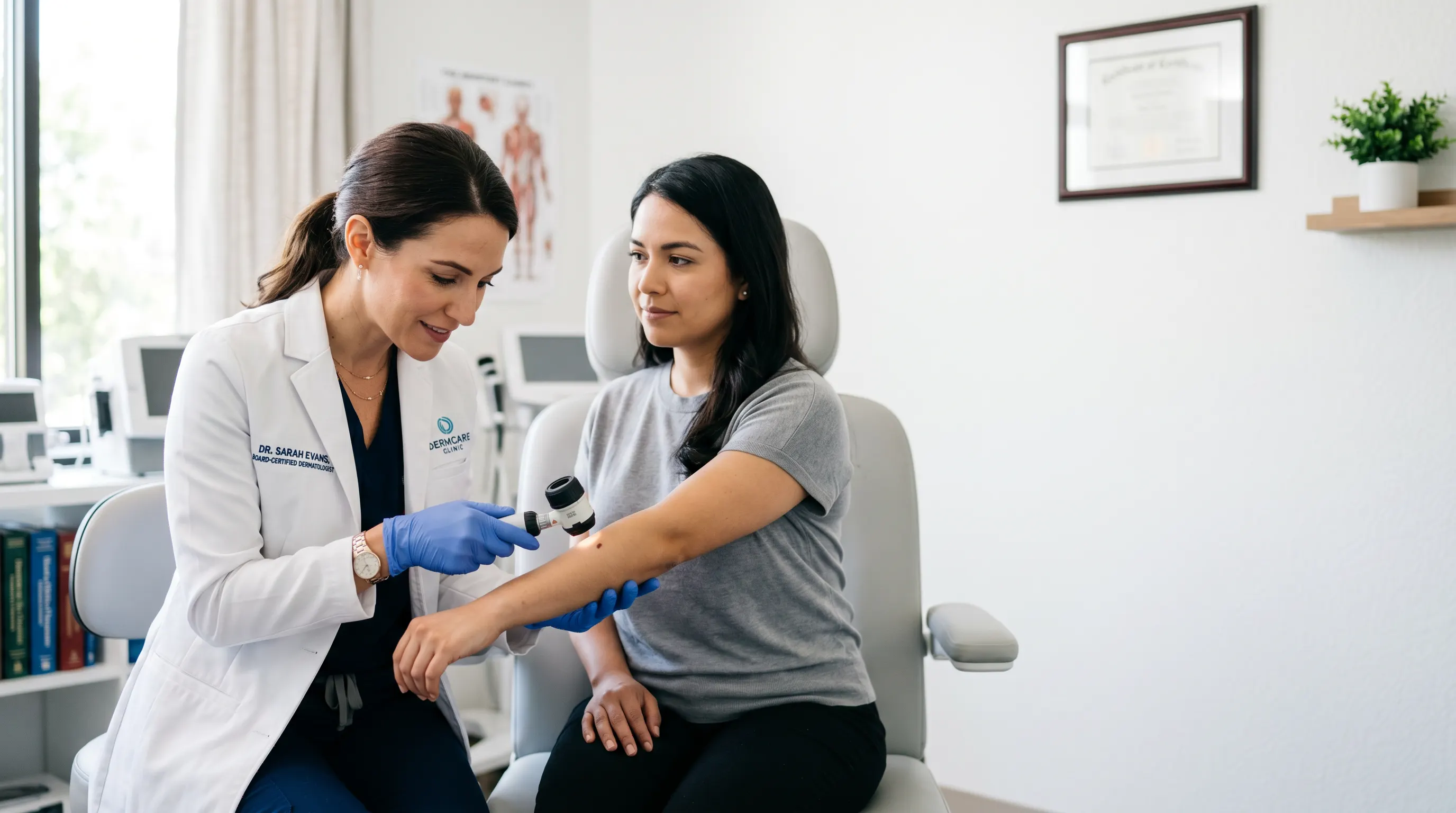
Dermatologists professionals serving San Diego, CA
Key Takeaways
•San Diego has 20 listed dermatology professionals with an impressive average rating of 4.7 out of 5 stars, indicating a consistently high standard of care across the market.
•Four of the top five rated practices hold a perfect 5.0-star rating, led by Premier Derm MD (141 reviews) and Skin Surgery & Aesthetic Dermatology (114 reviews), giving patients strong options for elite-level care.
•San Diego's year-round Mediterranean sun exposure makes it one of the highest-risk cities in California for cumulative UV damage and skin cancer — annual full-body skin checks are not optional here, they are essential.
•Consultation costs typically run $150–$500, with procedures ranging from $200 to over $5,000 depending on complexity; cosmetic procedures are most affordably timed in fall and winter when demand dips.
•All 20 listed dermatology businesses in San Diego offer direct phone contact, meaning you can always speak to someone directly rather than relying solely on online booking portals.
Dermatology in San Diego: What You Need to Know
San Diego presents a paradox that every dermatologist in the city understands intimately: it is one of the most desirable places to live in the United States precisely because of its climate, yet that same Mediterranean sun — averaging over 266 sunny days per year — is the single greatest threat to the skin health of its 1.4 million residents. Cumulative UV exposure from decades of outdoor living, beach culture, and year-round recreational activity creates a population with elevated rates of basal cell carcinoma, squamous cell carcinoma, and melanoma compared to less sun-drenched metros. Add in the city's significant military population, many of whom have spent years in high-UV environments during deployments, and dermatologists here manage a heavier skin cancer burden than their peers in most other major U.S. cities. This is not a market where you want to settle for a provider who is anything less than board-certified and experienced in both medical and surgical dermatology.
Beyond skin cancer, San Diego's biotech corridor and military community shape the local dermatology market in meaningful ways. Biotech professionals often arrive from other regions and are accustomed to high standards of evidence-based medicine, driving demand for practices that stay current with the latest treatment protocols and technologies. Military families, meanwhile, frequently navigate TRICARE coverage alongside private insurance, making practices familiar with that billing landscape especially valuable. On the cosmetic side, San Diego's culture of physical wellness and appearance — reinforced by beach-adjacent lifestyles — sustains strong demand for injectable treatments, laser resurfacing, and cosmetic consultations year-round. With 20 listed professionals in the market averaging 4.7 stars, patients have access to genuinely excellent care, but the range of specializations, practice models, and cost structures means that doing your homework before booking still matters enormously.
Wildfires represent an underappreciated dermatology concern specific to the greater San Diego region. Smoke particulate from fire events — San Diego County has experienced some of California's most destructive fires — deposits fine particles on the skin that can trigger or worsen inflammatory conditions including acne, eczema, rosacea, and contact dermatitis. Residents who notice flare-ups coinciding with air quality events should mention this history to their dermatologist, as it influences both diagnosis and treatment planning. A San Diego-savvy dermatologist will ask about wildfire exposure and outdoor activity levels as part of a thorough intake, not just inquire about sunscreen use.
San Diego Local Tip: The San Diego County UV Index regularly hits 'Very High' (8–10) and occasionally 'Extreme' (11+) between April and September, even on overcast marine-layer mornings. Marine layer does not block UV — it scatters it. Patients who work near Torrey Pines, Mission Bay, or in open biotech campuses in Sorrento Valley should factor in ambient midday UV exposure when discussing sun protection strategies with their dermatologist. SPF 50 reapplied every 90 minutes is the clinical standard for San Diego outdoor lifestyles, not a generous precaution.
How Much Does Dermatology Cost in San Diego?
Dermatology costs in San Diego track closely with the broader Southern California market, which sits in the upper tier nationally due to high overhead, real estate costs, and strong demand for cosmetic services. A new patient consultation for a medical dermatology concern — a suspicious mole, a chronic skin condition, or a new rash — typically runs $150 to $300 out of pocket at practices that accept insurance, and $250 to $500 at cash-pay or concierge-model practices. Cosmetic consultations are generally not covered by insurance and are priced similarly. When procedures are involved, costs escalate significantly depending on complexity: a simple shave biopsy might add $100–$200 to a visit, while Mohs micrographic surgery for skin cancer can range from $1,000 to $4,000 or more depending on tumor size and location. Laser resurfacing, body contouring, and injectable treatments sit in the $500–$3,000 range per session for most patients.
Insurance coverage is one of the most consequential variables in San Diego's dermatology market. Military families using TRICARE need to confirm whether a practice is TRICARE-authorized before booking, as not all listed practices accept it despite the large military presence in areas like Chula Vista, National City, and near Naval Base San Diego. For cosmetic procedures, insurance coverage is uniformly unavailable, meaning patients should request itemized cost breakdowns before committing to multi-session treatment plans. Some practices offer financing through third-party medical lending programs, which can be useful for elective procedures in the $2,000–$5,000 range. Always ask about cancellation fees and package refund policies upfront, as these vary significantly between practices.
Service
Low Estimate
High Estimate
Notes
New Patient Medical Consultation
Low$150
High$500
Lower end at insurance-accepting practices; upper end at cash-pay or concierge models. TRICARE coverage varies by practice in San Diego.
Skin Cancer Screening (Full Body)
Low$150
High$350
Often partially covered by insurance as preventive care. High-frequency screenings recommended given San Diego's UV index levels.
Cosmetic Injectable Treatments (Botox, Fillers)
Low$300
High$2,500
Priced per unit or per syringe. San Diego cosmetic demand is year-round; fall/winter appointments may have shorter wait times.
Laser Resurfacing / Skin Cancer Procedures (Mohs, Excision)
Low$500
High$5,000+
Mohs surgery is the gold standard for high-risk skin cancers and is typically covered by insurance. Cosmetic laser procedures are not covered.
Money-Saving Tip for San Diego Patients: Schedule elective cosmetic procedures — laser treatments, chemical peels, and injectables — in October through December. Demand drops as San Diegans shift away from beach season, and some practices offer promotional pricing or shorter wait times. More importantly, post-procedure sun avoidance is clinically required after most laser and resurfacing treatments, and San Diego's lower-UV winter months make recovery significantly more manageable without disrupting your daily routine. This is when the city's top cosmetic dermatology practices have the most scheduling flexibility.
How to Choose the Right Dermatology
5 Questions to Ask Before Hiring
Is the dermatologist board-certified by the American Board of Dermatology (ABD)? The right answer is yes, without hesitation. Board certification requires passing rigorous written and clinical examinations and demonstrates a minimum standard of medical training. In San Diego's competitive market, board-certified providers are the norm among reputable practices — if a practice cannot confirm ABD certification, move on. Fellowship training in a subspecialty such as Mohs surgery, cosmetic dermatology, or pediatric dermatology is an additional credential worth asking about if your needs are specialized.
What is the typical wait time for a new patient appointment, and do you offer urgent slots for concerning lesions? The right answer is a new patient appointment within 2 to 8 weeks for routine concerns, with same-week or next-day availability for rapidly changing or symptomatic lesions. San Diego's high skin cancer incidence means that any practice worth your time has a clear protocol for expedited access when a patient presents with a suspicious mole or changing lesion. If a practice's earliest new patient slot is 10+ weeks out with no exceptions for urgent concerns, that is a clinical access problem.
Do you have experience treating patients with San Diego-specific skin concerns — UV-related damage, wildfire smoke-related flares, and outdoor recreation-related conditions? The right answer is an affirmative yes accompanied by some specificity. A dermatologist who lives and practices in San Diego should be fluent in discussing cumulative sun damage in middle-aged patients, the dermatological effects of wildfire smoke particulate, and skin conditions exacerbated by surfing, trail running, or cycling in high-UV conditions. Generic answers about sunscreen and moisturizer without local context are a yellow flag.
What diagnostic and treatment technologies does your practice have on-site? The right answer depends on your needs, but a well-equipped San Diego practice should have dermoscopy for mole evaluation at minimum, with better-equipped practices offering reflectance confocal microscopy, photodynamic therapy, or on-site pathology processing for Mohs surgery. For cosmetic concerns, ask specifically about the laser platforms and energy-based devices they use — reputable practices invest in and maintain current technology rather than relying on outdated equipment. If they cannot name the specific devices and explain why they chose them, that is a concern.
What is your billing and insurance policy, and do you accept TRICARE? The right answer is full transparency about which insurance plans are accepted, what is billed as cosmetic versus medical, and — critically for San Diego — whether the practice is TRICARE-authorized. Billing disputes are among the most common patient complaints in dermatology. Ask upfront what portion of your visit will be billed to insurance versus out of pocket, whether prior authorization is needed for any planned procedures, and what the practice's policy is on cosmetic upsells during a medical visit.
Red Flags When Hiring Dermatology
Red Flags to Watch For When Choosing a San Diego Dermatologist:
Non-board-certified providers performing medical dermatology procedures: In California, the term 'medical spa' does not legally require a physician to be board-certified in dermatology or even present during procedures. If a practice performing biopsies, laser treatments, or mole removals cannot confirm direct ABD-certified physician oversight, this is a serious patient safety concern — not merely a credential gap.
Excessive upselling during a medical visit: If you arrive for a skin cancer screening and leave with a quote for four cosmetic procedures you did not ask about, that is a pattern worth noting. Reputable dermatologists address your stated concern first and foremost. Cross-selling cosmetic treatments during a medical appointment, particularly without completing the medical evaluation, is a red flag for a practice prioritizing revenue over patient care.
Vague or evasive answers about biopsy results and follow-up protocols: In San Diego, where skin cancer rates are elevated, any practice that does not have a clearly articulated process for communicating biopsy results — including a defined timeline and direct contact for results — should be avoided. 'We'll call you if it's something' is not an acceptable follow-up protocol for any suspicious lesion.
No direct phone contact or difficulty reaching a live person: All 20 listed dermatology businesses in San Diego offer direct phone contact. If a practice routes all communication through a portal or third-party scheduling app with no option to speak to a staff member directly, your ability to escalate urgent concerns is compromised. This matters most in situations involving changing lesions, post-procedure complications, or medication reactions.
Wildly below-market pricing for procedures with no clear explanation: In San Diego's higher-cost market, pricing significantly below the $150–$500 consultation range or dramatically below typical procedure costs should prompt questions about what is being cut. This may indicate outdated equipment, non-physician providers performing physician-level procedures, or practices that make up revenue through aggressive upselling after the initial discounted appointment.
Top-Rated Dermatology in San Diego
Among the 20 listed dermatology professionals in San Diego, five practices have distinguished themselves through a combination of near-perfect or perfect ratings and meaningful review volume — the two factors that together signal genuine and sustained patient satisfaction rather than statistical noise from a handful of reviews.
Premier Derm MD holds the distinction of being the top-rated dermatology practice in the San Diego market, carrying a perfect 5.0-star rating across 141 reviews. A rating of 5.0 maintained across more than 100 reviews is statistically uncommon in any healthcare category and speaks to a practice that has built consistent systems around patient experience, not just clinical outcomes. Skin Surgery & Aesthetic Dermatology matches that 5.0 rating with 114 reviews, and the name signals a practice with dual competency in surgical dermatology — relevant for San Diego's skin cancer patient population — and aesthetic treatments. Dermatology Specialists, Inc. also holds a 5.0 rating across 106 reviews, providing a third high-volume, top-rated option for patients seeking established practices with demonstrated track records.
Maven Dermatology by Jusleen Ahluwalia, MD, FAAD carries a 5.0 rating with 14 reviews — a smaller sample that nonetheless indicates early excellence, and the FAAD credential (Fellow of the American Academy of Dermatology) signals active participation in the professional standard-setting body for the specialty. Pacific Dermatology & Cosmetic Laser Center rounds out the top five with a 4.9-star rating across the largest review pool in this group — 221 reviews — making it arguably the most statistically robust rating signal in the San Diego market. A 4.9 across 221 reviews is extraordinarily difficult to maintain and reflects consistent, high-volume patient satisfaction across both medical and cosmetic services. The market average of 4.7 stars across all 20 listed professionals is itself well above average for healthcare services nationally, indicating that San Diego patients have access to a genuinely high-quality dermatology ecosystem.
Company
Rating
Reviews
Best For
Premier Derm MD
5.0★
141
Patients seeking a top-rated practice with a proven track record of patient satisfaction across a high volume of reviews; ideal for both new and established dermatology patients in San Diego.
Skin Surgery & Aesthetic Dermatology
5.0★
114
Patients needing surgical dermatology services — including skin cancer excision — alongside cosmetic treatments; the name reflects dual clinical focus relevant to San Diego's high skin cancer environment.
Maven Dermatology by Jusleen Ahluwalia, MD, FAAD
5.0★
14
Patients who prioritize FAAD-credentialed, academically oriented care; the FAAD designation indicates active AAD membership and adherence to the specialty's highest professional standards.
Dermatology Specialists, Inc.
5.0★
106
Patients seeking a well-established specialist practice with a perfect rating across a substantial review base; a strong option for comprehensive medical dermatology in San Diego.
Pacific Dermatology & Cosmetic Laser Center
4.9★
221
Patients wanting the most statistically robust rating signal in the San Diego market; 221 reviews at 4.9 stars indicates consistently excellent care across both medical and cosmetic laser services.
Seasonal Guide for San Diego
San Diego's Mediterranean climate creates distinct seasonal rhythms in the local dermatology market that differ meaningfully from what patients might expect if they have previously lived in four-season climates. Understanding these rhythms helps patients time appointments strategically and set realistic expectations about wait times and procedure scheduling.
Spring (March through May) marks the beginning of peak demand for skin cancer screenings in San Diego. As temperatures rise and residents return to outdoor activities — surfing at Blacks Beach, hiking in Torrey Pines State Reserve, cycling through Balboa Park — dermatology practices begin fielding higher volumes of requests for full-body skin checks. Patients who delay scheduling into June and July will face the longest wait times of the year for new patient medical appointments. The clinical guidance is simple: book your annual skin cancer screening in February or early March, before the rush. This is especially important for patients in higher-risk categories — those with a personal or family history of melanoma, fair skin types, or extensive cumulative sun exposure from years of San Diego outdoor living or military deployment in sun-intense environments.
Summer (June through August) is the highest-UV period in San Diego and the worst time for post-procedure recovery involving the face or exposed areas of the body. Patients who undergo laser resurfacing, chemical peels, or surgical excisions during summer will struggle to maintain the strict sun avoidance protocols required for proper healing. Practices that serve sophisticated cosmetic patients actively counsel against scheduling these procedures in summer. This is also when back-to-school acne surges become clinically apparent: adolescent patients, particularly in communities near UCSD, USD, and the major public school districts, begin presenting in higher numbers with inflammatory acne in August and September as stress, schedule changes, and dietary shifts combine with residual summer heat and sweat.
Fall (September through November) is the optimal window for laser treatments, resurfacing procedures, photodynamic therapy, and any cosmetic intervention requiring post-procedure sun avoidance. The UV index drops meaningfully, marine layer increases in frequency, and San Diego residents are behaviorally more likely to stay indoors after 10 a.m. — all of which support better healing outcomes. Practices with strong cosmetic service lines tend to be busiest in fall for this reason, so patients should book fall appointments in August rather than waiting until October. One San Diego-specific caveat: wildfire season peaks in fall, and air quality events can complicate post-procedure recovery for patients with sensitive or recently treated skin. Monitor AQI on days following procedures and discuss a contingency plan with your dermatologist if a fire event occurs during your recovery window.
Winter (December through February) is the quietest period in San Diego dermatology, particularly for cosmetic services. Wait times for new patient appointments are shorter, and some practices have scheduling flexibility that is simply unavailable the rest of the year. This is an excellent time for patients to establish care with a new dermatologist, complete multi-session treatment plans, or address chronic conditions that may have been deprioritized during the busy summer months. Winter is also when San Diego residents returning from holiday travel — particularly those who vacationed in tropical destinations with extreme UV exposure — should schedule a post-trip skin check if they noticed any new or changing lesions during or after their trip.
Frequently Asked Questions
How long will I wait for a new patient dermatology appointment in San Diego?
For a routine new patient appointment at a reputable San Diego dermatology practice, expect a wait of 2 to 8 weeks. The shorter end of that range is typical in winter months (December through February), while spring and summer — peak skin cancer screening season — push wait times toward the longer end. If you have a rapidly changing lesion, a mole that has recently grown, changed color, or started bleeding, call the practice directly and describe the concern explicitly. Most board-certified practices in San Diego have protocols for expedited evaluation of potentially malignant lesions, often within days. The key is using direct phone contact — all 20 listed San Diego dermatology businesses offer this — rather than waiting in an online booking queue.
Does San Diego's climate mean I really need annual skin checks, or is that an oversell?
Annual skin checks in San Diego are a genuine clinical recommendation, not an upsell. San Diego County consistently ranks among the top counties in California for melanoma incidence, driven by the combination of high UV index, culturally ingrained outdoor activity, and a large population with decades of cumulative sun exposure. The American Academy of Dermatology recommends annual full-body skin exams for adults with any risk factors, and in San Diego, risk factors are extraordinarily common: fair skin, history of sunburns, outdoor employment or recreation, and extended time in high-UV environments such as San Diego Bay, the coast, or desert-adjacent areas like East County. For patients over 50 with significant sun exposure history, some dermatologists recommend twice-yearly checks. This is evidence-based medicine, not marketing.
Find Dermatologists Professionals in San Diego
Browse top-rated contractors, compare reviews, and get free quotes.
Are there specific skin concerns caused by San Diego wildfires I should discuss with my dermatologist?
Yes, and this is an underrecognized issue in the local market. Wildfire smoke contains fine particulate matter (PM2.5), volatile organic compounds, and polycyclic aromatic hydrocarbons that deposit on the skin surface and can penetrate the skin barrier. Clinically, this is associated with flares of acne vulgaris, atopic dermatitis (eczema), rosacea, and contact dermatitis — particularly in patients who already have compromised skin barriers. San Diego County residents who experience recurrent flares of these conditions during or after fire events should document the timing and bring that history to their dermatologist. Treatment may include barrier repair with ceramide-based moisturizers, anti-inflammatory topicals, and temporary avoidance of irritating actives (retinoids, acids) during high-AQI periods. A dermatologist who is not aware of this clinical pattern may attribute flares to other triggers and miss a straightforward intervention.
What does it cost to see a top-rated dermatologist in San Diego, and is it worth paying more for a 5.0-star practice?
A new patient consultation at a San Diego dermatology practice typically costs $150 to $500 out of pocket, depending on whether the practice accepts your insurance, whether the visit is medical or cosmetic, and the practice model. The top-rated practices in the market — Premier Derm MD (5.0★, 141 reviews), Skin Surgery & Aesthetic Dermatology (5.0★, 114 reviews), and Dermatology Specialists, Inc. (5.0★, 106 reviews) — are not necessarily the most expensive, as their ratings reflect patient experience broadly, not just clinical excellence relative to cost. What a 5.0 rating across 100+ reviews does signal is consistency: consistent communication, consistent follow-through on results, consistent access. In dermatology, where delayed diagnosis of a melanoma can have life-altering consequences, paying a modest premium for a practice with proven patient satisfaction is generally worthwhile. Procedures cost the same regardless of where they are performed — the variable is the judgment of the physician performing them.
What credentials should I look for in a San Diego dermatologist, and what do the different letter designations mean?
The most important credential in dermatology is board certification by the American Board of Dermatology (ABD). This requires completion of an accredited dermatology residency, passing a rigorous two-part certification examination, and — for continuing certification — ongoing medical education and periodic recertification. In California, and specifically in San Diego's competitive market, ABD certification should be considered a baseline, not a differentiator. Beyond ABD certification, look for FAAD (Fellow of the American Academy of Dermatology), which indicates active membership in the specialty's primary professional organization and adherence to its ethics and clinical guidelines — Maven Dermatology by Jusleen Ahluwalia, MD, FAAD holds this designation. For surgical procedures, FACMS (Fellow of the American College of Mohs Surgery) indicates subspecialty training in Mohs micrographic surgery, the most precise technique for high-risk skin cancers. Some dermatologists also hold dual board certification in dermatology and dermatopathology, which is particularly relevant for practices that read their own biopsies in-house. Always confirm credentials directly with the practice or through the ABD's public directory at abderm.org.