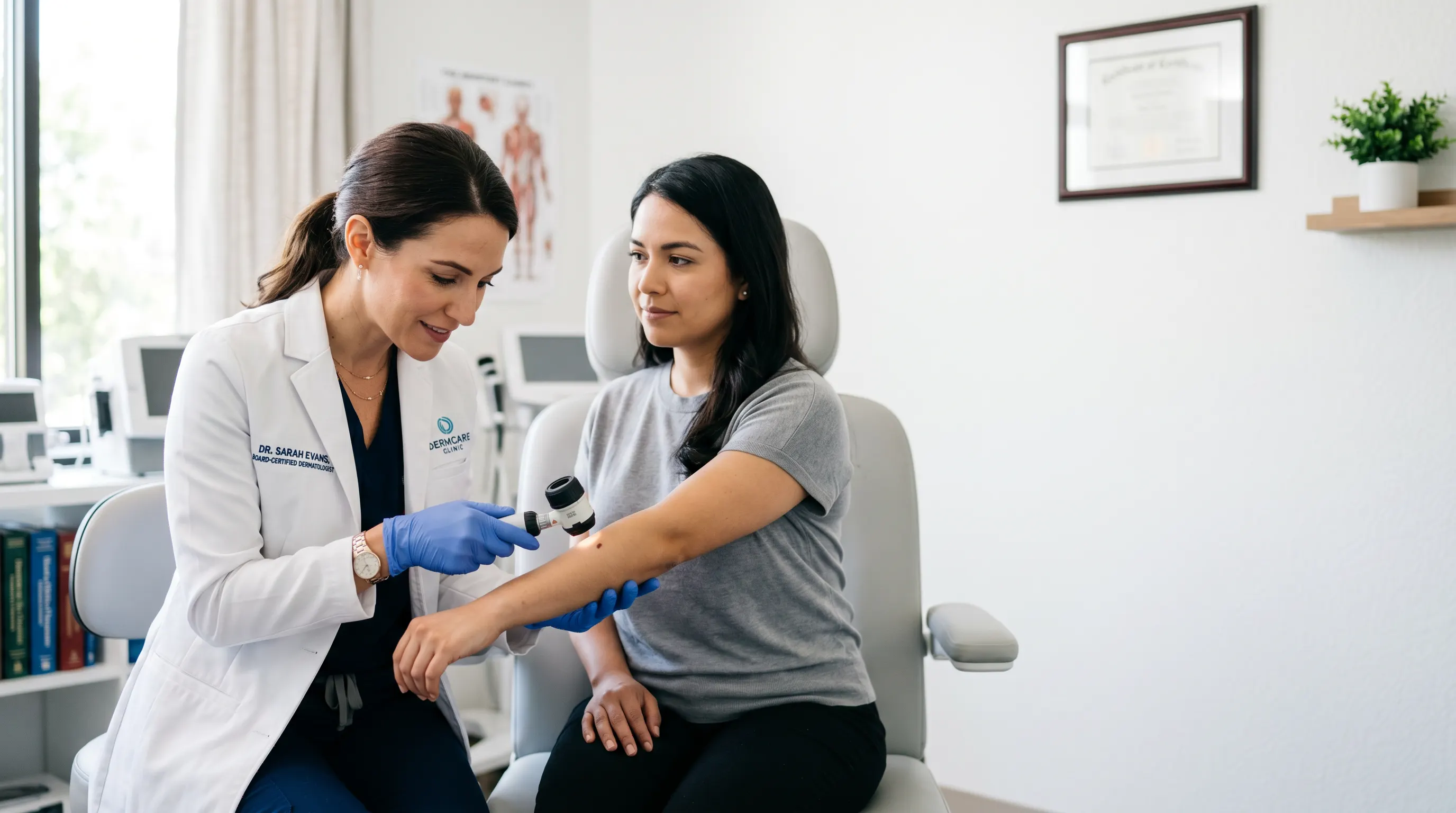
Dermatologists professionals serving San Francisco, CA
Key Takeaways
•San Francisco has 20 listed dermatology professionals with an impressive average rating of 4.7 out of 5 stars, reflecting a competitive, high-quality market driven by the city's affluent, health-conscious tech workforce.
•Kaveri Karhade MD Dermatology and San Francisco Dermatopathology Institute both hold perfect 5.0-star ratings, while David J MacGregor MD leads all providers in total reviews at 1,855 — a strong signal of sustained patient satisfaction at scale.
Consultation costs in San Francisco typically run $150–$500, with procedures ranging from $200 to $5,000+, reflecting the city's higher cost of living and concentration of cosmetic and advanced dermatological services.
•
•San Francisco's cool Mediterranean climate creates a deceptive UV risk: marine layer and fog cause many residents to skip sunscreen, yet cumulative UV exposure remains significant enough to warrant annual skin cancer screenings, especially for the city's large outdoor recreation community.
•All 20 listed dermatology businesses in San Francisco offer direct phone contact, meaning you can always reach a live line rather than navigating portal-only scheduling — a meaningful advantage when booking time-sensitive appointments.
Dermatology in San Francisco: What You Need to Know
San Francisco's dermatology market is shaped by two forces that rarely coexist in the same city: a demanding cosmetic clientele drawn from one of the world's highest concentrations of high-income tech professionals, and a genuine medical dermatology need driven by an aging population, a diverse patient base with wide-ranging Fitzpatrick skin types, and an outdoor culture that underestimates UV risk behind the city's famous fog. With 20 listed professionals serving a population of approximately 870,000, San Francisco has a reasonably healthy provider-to-patient ratio, but demand consistently outpaces supply — new patients should expect appointment wait times of two to eight weeks, and that window can stretch considerably for in-demand specialists. The average rating of 4.7 out of 5 stars across all listed providers is notably high, signaling that the market has self-selected for quality: underperforming practices struggle to retain patients in a city where residents are both vocal online reviewers and willing to travel across town for a better experience.
The city's cool Mediterranean climate is a double-edged sword for skin health. The persistent marine layer from June through August — locally known as 'Fogust' — gives residents a false sense of UV protection that dermatologists consistently cite as a driver of preventable sun damage. Overcast skies block only a fraction of the UV radiation that reaches the skin, and San Francisco's year-round mild temperatures mean people spend more time outdoors across all seasons than they might in a colder climate. This creates a steady demand for skin cancer screenings, actinic keratosis treatment, and Mohs surgery referrals that keeps medical dermatology practices consistently busy. Simultaneously, the tech industry's culture of wellness spending and appearance investment sustains robust demand for cosmetic dermatology — injectables, laser treatments, chemical peels, and body contouring — at price points that would be unusual in most American cities. Understanding which type of practice serves your needs is the first and most important decision you will make when navigating San Francisco's dermatology landscape.
San Francisco local tip: Because of the city's notorious 'Fogust' marine layer, many residents assume they do not need daily SPF protection during summer months. Board-certified dermatologists in the city uniformly recommend broad-spectrum SPF 30 or higher year-round regardless of cloud cover — UV rays penetrate overcast skies at up to 80% of their peak intensity. This is one of the most common and correctable oversights San Francisco dermatologists see in new patients presenting with early-stage sun damage.
How Much Does Dermatology Cost in San Francisco?
Dermatology costs in San Francisco sit at the higher end of the national range, consistent with the city's elevated cost of living, premium commercial real estate, and a patient base accustomed to paying for quality. A standard new patient consultation typically runs $150–$500 depending on the provider's credentials, practice type, and whether the visit is primarily medical or cosmetic in nature. Medical dermatology visits — for acne, eczema, psoriasis, rosacea, or skin cancer screenings — are more often covered by insurance, which can dramatically reduce out-of-pocket costs, though patients should confirm whether a specific provider is in-network before booking. Cosmetic dermatology services are almost universally out-of-pocket and command premium pricing in San Francisco: a single syringe of hyaluronic acid filler that might cost $600 in a mid-sized American city can run $900–$1,400 at a reputable San Francisco practice, and laser treatments for resurfacing or pigmentation correction commonly range from $500 to $3,000 per session depending on the technology and treatment area.
Procedures with a surgical component — Mohs micrographic surgery for skin cancer, excisions, and cryotherapy for extensive lesions — typically fall under medical insurance coverage when medically indicated, but the facility fees and pathology costs can still generate significant patient responsibility depending on deductible status. For those without insurance or with high-deductible plans, many San Francisco dermatology practices offer transparent self-pay pricing or package rates for multi-session treatments. It is worth asking directly whether a practice offers any bundled pricing for cosmetic treatments, as several top-rated providers in the city offer loyalty pricing or package discounts that are not advertised publicly. Always request an itemized estimate before any procedure.
Service
Low Estimate
High Estimate
Notes
New Patient Consultation
Low$150
High$500
Medical visits often covered by insurance in-network; cosmetic consultations typically out-of-pocket. San Francisco rates reflect higher overhead costs.
Cosmetic Injectables (Botox/Fillers)
Low$400
High$1,800
Priced per area or per syringe. San Francisco cosmetic practices typically charge at the upper end of national averages given demand from the tech industry corridor.
Price varies significantly by laser type (ablative vs. non-ablative), treatment area size, and number of passes. Package pricing available at many practices.
Surgical Procedures (Mohs, Excisions, Biopsies)
Low$200
High$5,000
Mohs surgery and excisions for confirmed skin cancer are generally covered by insurance when medically indicated. Self-pay rates apply for cosmetic removal of benign lesions.
Money-saving tip for San Francisco: If you need a medical dermatology visit — annual skin cancer screening, acne management, or a suspicious lesion evaluation — book through your primary care physician's referral rather than self-referring. Many San Francisco dermatology practices prioritize referral patients in their scheduling queue, and a referral ensures your visit is coded as a medical consultation rather than cosmetic, maximizing your insurance reimbursement. Additionally, scheduling cosmetic procedures in fall or winter (October through February) can sometimes yield better availability and, at some practices, promotional pricing — and the reduced sun exposure during recovery is genuinely clinically advantageous for laser and peel patients.
How to Choose the Right Dermatology
5 Questions to Ask Before Hiring
Are you board-certified by the American Board of Dermatology (ABD), and can I confirm your certification? The right answer is an unequivocal yes, with a willingness to direct you to the ABD's public lookup tool at abdbadge.org. Board certification requires completion of an accredited residency and passage of rigorous written and clinical exams. In San Francisco's competitive market, virtually all reputable practices are ABD-certified — any hesitation is a serious concern.
Do you specialize in medical dermatology, cosmetic dermatology, or both — and what percentage of your practice is devoted to each? The right answer depends on your needs. If you have a suspicious mole or chronic skin condition, you want a provider whose practice is primarily medical, not one where cosmetic procedures dominate the schedule. Conversely, if you're seeking injectables or laser treatments, a cosmetic-focused practice with dedicated equipment and trained staff will deliver better results. San Francisco has excellent providers across both specialties, but they are not interchangeable.
What is your current wait time for new patients, and do you offer urgent slots for concerning lesions? The right answer for routine visits is two to eight weeks, which is typical for San Francisco. However, any reputable practice should have a protocol for expedited appointments when a patient or referring physician flags a lesion as potentially malignant. A practice that cannot accommodate urgent medical concerns within a reasonable timeframe should not be your first call for skin cancer-related issues.
What is your cancellation and no-show policy, and are there fees I should be aware of? The right answer is a clear, written policy disclosed upfront. Many San Francisco dermatology practices charge $50–$150 for late cancellations or no-shows given the high demand and limited appointment availability. Knowing this in advance prevents billing surprises and also tells you something about how the practice is managed — organized billing practices typically correlate with organized clinical care.
For cosmetic procedures specifically: how many times have you performed this procedure, and can you share before-and-after examples from your own patients? The right answer is a provider who can cite substantial personal case volume (not aggregate clinic volume), show you real patient outcomes from their own hands, and discuss realistic expectations and potential complications without minimizing them. In San Francisco's cosmetic dermatology market, impressive marketing materials are common — what separates excellent providers is candid, evidence-based consultation that prioritizes your outcome over upselling.
Red Flags When Hiring Dermatology
Red flags to watch for when choosing a San Francisco dermatologist:
Unable to confirm ABD board certification or deflects the question: In California, medical licensure and board certification are separate. A licensed physician is not automatically board-certified in dermatology. Any reluctance to confirm certification status through the American Board of Dermatology's public registry is a non-negotiable disqualifier.
Pressure to purchase skincare products or cosmetic packages during a medical visit: A practice that routinely upsells retail skincare lines or bundles cosmetic treatments during what should be a diagnostic skin cancer screening has a financial incentive misalignment. Medical visits should be focused on diagnosis and treatment, not revenue generation from add-on services.
Minimal or unresponsive phone contact despite 100% of listed San Francisco providers offering direct phone lines: If a practice is difficult to reach before you become a patient, administrative responsiveness will not improve after. All 20 listed San Francisco dermatology businesses offer direct phone contact — there is no reason to tolerate poor pre-appointment communication.
Extremely short consultation times with no opportunity for questions: Dermatology consultations in San Francisco should typically run 15–30 minutes for follow-ups and 30–60 minutes for comprehensive new patient evaluations. A provider who rushes through a full-body skin exam in under 10 minutes is not performing a thorough screening — this is particularly concerning for patients with a personal or family history of melanoma.
Unusually low pricing that significantly undercuts the $150–$500 consultation range without a clear explanation: Deeply discounted cosmetic dermatology in San Francisco often reflects the use of diluted injectables, undertrained injectors, or off-label products. The city's cost structure makes genuine rock-bottom pricing on legitimate procedures essentially impossible at a reputable practice.
Top-Rated Dermatology in San Francisco
Among the 20 listed dermatology professionals in San Francisco, five providers stand out based on rating and review volume — metrics that, when considered together, offer the most reliable signal of consistent quality. Two practices have achieved a perfect 5.0-star rating: Kaveri Karhade MD Dermatology, which holds a 5.0 across 42 reviews, and San Francisco Dermatopathology Institute, which maintains a 5.0 across an impressive 116 reviews. A perfect rating across triple-digit reviews is genuinely rare in any medical specialty and reflects an unusual level of sustained patient satisfaction.
Dr. Kaveri Karhade is a board-certified dermatologist with a reputation for combining rigorous medical dermatology with an aesthetic sensibility that resonates strongly with San Francisco's patient base. Her practice is noted for thorough consultations and a communicative approach that patients frequently highlight in reviews. San Francisco Dermatopathology Institute occupies a distinct niche in the market — dermatopathology is a subspecialty focused on the laboratory diagnosis of skin diseases through biopsy and microscopic analysis, making it an essential referral destination for complex diagnostic cases rather than a direct-to-consumer clinical practice.
Michael J. Dans, MD, PhD holds a 4.9-star rating across 647 reviews, with the doctoral credential signaling a research background that often translates to expertise in complex or rare dermatological conditions. San Francisco Dermatology, Inc. matches that 4.9 rating across 843 reviews, making it one of the most extensively rated practices in the city with consistently high scores — a reliable choice for patients who weight review volume heavily in their decision-making. David J MacGregor MD leads all providers in total review volume at 1,855 reviews with a maintained 4.9-star rating, which is arguably the most compelling signal of consistent quality in the entire San Francisco market. Sustaining near-perfect ratings across nearly 2,000 patient reviews over time requires genuine and repeatable excellence across clinical outcomes, communication, and administrative experience.
Company
Rating
Reviews
Best For
Kaveri Karhade MD Dermatology
5.0★
42
Patients seeking a high-touch, communicative practice combining medical and cosmetic dermatology with a dermatologist known for thorough consultations and strong bedside manner
San Francisco Dermatopathology Institute
5.0★
116
Physicians and patients requiring subspecialty laboratory diagnosis of complex skin conditions via biopsy; an essential referral resource for unusual or diagnostically challenging cases
Michael J. Dans, MD, PhD
4.9★
647
Patients with complex, rare, or research-adjacent dermatological conditions who benefit from a provider with both clinical and doctoral-level scientific training
San Francisco Dermatology, Inc.
4.9★
843
Patients who prioritize a well-established practice with a broad track record of high-volume, consistent quality across both medical and cosmetic dermatology services
David J MacGregor MD
4.9★
1855
Patients who weight extensive peer-reviewed real-world outcomes most heavily; the highest review volume in the San Francisco market with a near-perfect sustained rating signals exceptional consistency
Seasonal Guide for San Francisco
San Francisco's cool Mediterranean climate creates seasonal demand patterns in dermatology that differ meaningfully from the rest of California and from national norms. Understanding these patterns helps patients book appointments strategically and avoid the city's most congested scheduling windows.
Spring (March through May) is the optimal time to schedule your annual skin cancer screening. As temperatures warm and San Francisco residents emerge from the relatively indoor winter months to resume hiking in the Marin Headlands, cycling across the Golden Gate, and spending weekends at Ocean Beach, skin cancer screenings surge in demand across the city. Booking your full-body exam in early spring — before the rush — gives you the dual advantage of catching any changes that accumulated over winter and establishing a baseline before peak UV exposure in the coming months. Dermatologists in San Francisco uniformly recommend annual screenings for adults, and biannual screenings for those with a personal history of skin cancer, significant cumulative sun exposure, or a family history of melanoma.
Summer (June through August) in San Francisco is defined by the marine layer that blankets the city through mid-morning most days — the phenomenon locals call 'Fogust.' This is the season when dermatologists see the highest volume of patients presenting with sun damage that accumulated during outdoor weekend trips to sunnier microclimates: the East Bay hills, Wine Country, Lake Tahoe, and coastal stretches south of the city where fog burns off earlier. The lesson is that San Franciscans often experience their highest UV exposure outside city limits during summer, making sunscreen adherence for weekend travel as important as daily urban SPF habits.
Fall (September through November) is the strategic window for cosmetic dermatology procedures in San Francisco. The reasoning is clinical, not just aesthetic: laser resurfacing, chemical peels, and ablative treatments require strict sun avoidance during healing, and fall's shorter days and cooler temperatures naturally reduce incidental sun exposure. Many of the city's top cosmetic practices see their highest demand for Fraxel, CO2 laser, and deep chemical peels in October and November. Booking these appointments in September or early October positions you for full healing before any holiday events and takes advantage of the most favorable post-procedure conditions the city's climate offers.
Winter (December through February) is the best time for multi-session laser treatments (IPL, laser hair removal, pigment correction) given the minimal UV exposure and the ease of maintaining the sun avoidance protocols these treatments require. It is also when acne management visits for teenagers increase as the academic year's stress load and dietary changes accumulate — San Francisco's back-to-school surge in acne presentations typically begins in September but peaks in January and February as second-semester pressure intensifies. Winter is also the most pragmatic time to address cosmetic concerns that benefit from extended downtime, as the city's social calendar quiets between New Year's and spring.
The overarching seasonal truth for San Francisco is this: the city's mild, year-round outdoor culture means UV exposure never truly stops. Unlike in colder climates where winter provides a genuine sun exposure break, San Francisco residents accumulate UV damage continuously across all four seasons — making year-round sunscreen use and annual professional skin evaluations more important here than in most comparable American cities.
Frequently Asked Questions
How long does it typically take to get a new patient dermatology appointment in San Francisco?
In San Francisco, new patients should expect to wait two to eight weeks for a standard dermatology appointment. This window reflects the city's high demand relative to its 20 listed providers serving a population of approximately 870,000. The wait time can be shorter for practices with multiple providers or cancellation lists, and longer for highly sought-after specialists. If you have a lesion that is changing rapidly in size, color, or shape, or that is bleeding without healing, contact the practice directly and describe your concern — reputable San Francisco dermatologists maintain urgent scheduling protocols for potentially malignant presentations and should be able to see you within days rather than weeks in those circumstances.
What does it mean for a San Francisco dermatologist to be board-certified, and why does it matter?
Board certification by the American Board of Dermatology (ABD) means a physician has completed an accredited dermatology residency program (typically three years following medical school and internship), passed comprehensive written and clinical examinations, and met ongoing continuing medical education requirements. In California, state medical licensure permits a physician to practice medicine broadly, but it does not require specialty-specific certification — meaning a non-ABD-certified physician can legally offer dermatology services. ABD certification is the profession's most rigorous quality credential and the standard used by hospitals, insurers, and patients to evaluate competency. When evaluating any of San Francisco's 20 listed dermatology providers, confirming ABD certification through the board's public registry at abdbadge.org takes under two minutes and is the most important single due-diligence step you can take.
Find Dermatologists Professionals in San Francisco
Browse top-rated contractors, compare reviews, and get free quotes.
Does San Francisco's foggy climate mean I need less sun protection than in sunnier parts of California?
No — and this is one of the most consequential misconceptions San Francisco dermatologists correct in clinical practice. Cloud cover and fog block only a portion of UV radiation. On a heavily overcast San Francisco day, up to 80% of the UV that would reach your skin on a clear day still penetrates the atmosphere. More importantly, San Francisco residents frequently travel on weekends to microclimates with significantly higher UV exposure — the South Bay, Wine Country, Marin County, and coastal areas south of the city where fog burns off entirely by late morning. These weekend UV doses accumulate over years into clinically significant sun damage. Dermatologists in San Francisco uniformly recommend broad-spectrum SPF 30 or higher applied daily regardless of cloud cover, with reapplication every two hours during outdoor activities outside the city.
What is the difference between a dermatologist and a dermatopathologist, and when would I be referred to one?
A clinical dermatologist diagnoses and treats skin conditions directly through examination, procedures, and prescriptions. A dermatopathologist is a physician who specializes in the laboratory diagnosis of skin diseases — they examine tissue samples under a microscope to provide definitive diagnoses that cannot always be made through clinical examination alone. The San Francisco Dermatopathology Institute, rated 5.0 stars across 116 reviews, is an example of a subspecialty practice that serves primarily as a diagnostic resource for other physicians rather than a direct-to-patient clinical practice. You would typically be referred to a dermatopathologist's services (though not necessarily to their physical office) when your dermatologist performs a biopsy of a suspicious lesion — the tissue sample is sent to a dermatopathology lab for analysis. In complex or ambiguous cases, particularly for suspected melanoma or unusual inflammatory skin diseases, your dermatologist may specifically request that a board-certified dermatopathologist review the biopsy rather than a general pathology lab.
Are cosmetic dermatology procedures worth the higher price point in San Francisco compared to traveling to a lower-cost market?
This is a legitimate financial consideration, and the honest answer is: it depends on the procedure, the provider, and your risk tolerance. For minimally invasive cosmetic treatments like neurotoxin injections (Botox, Dysport) and soft tissue fillers, the variability in outcome quality between providers matters more than geography — an expert injector in San Francisco at a premium price will reliably outperform an inexperienced injector at a discount. The city's concentration of 4.9- and 5.0-rated providers, including David J MacGregor MD with 1,855 reviews and a 4.9-star rating, reflects a genuinely high-quality local market. For more complex or irreversible procedures — fractional laser resurfacing, Mohs surgery, or procedures requiring multiple follow-up visits — the logistical and continuity-of-care advantages of staying local almost always outweigh any cost savings from traveling. Complications and touch-up needs are best managed by the original provider, and the cost of a single follow-up flight to a lower-cost market typically eliminates any savings from the initial procedure.