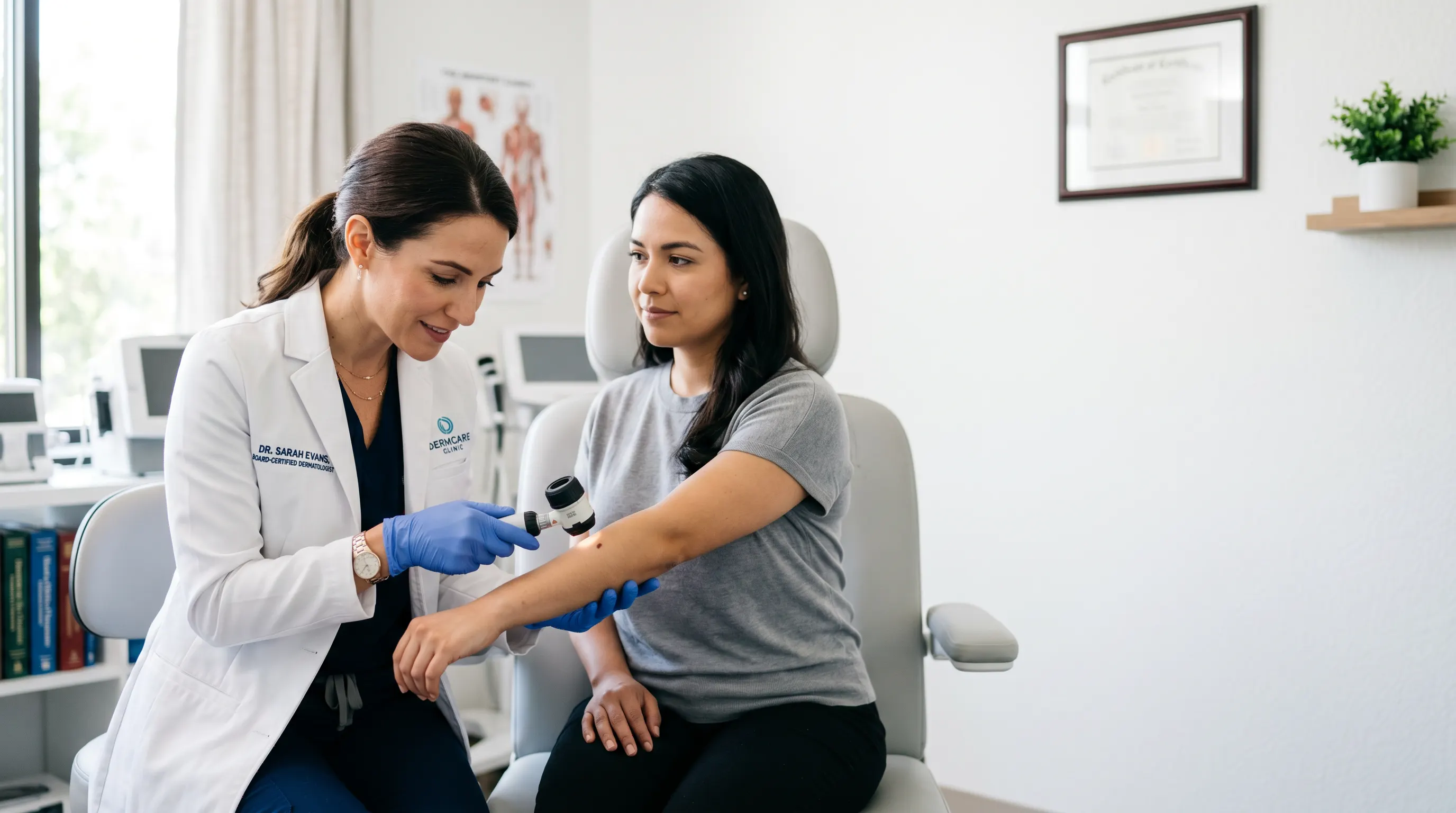
•Seattle has 20 listed dermatology professionals with an impressive average rating of 4.6 out of 5 stars, indicating a high-quality local market with strong patient satisfaction across the board.
•The top 5 rated practices include UW Medicine Dermatology Care at South Lake Union and The Perq Dermatology (both at 5.0★), Young Dermatology and Modern Dermatology (both at 4.9★), and Frontier Dermatology (4.8★ across nearly 800 reviews).
•Seattle's oceanic, rainy climate creates unique skin concerns — particularly fungal conditions, moisture-driven dermatitis, and paradoxically elevated melanoma risk due to intense UV exposure during rare sunny months when residents spend extended time outdoors without adequate sun protection.
•Initial consultation costs in Seattle typically range from $150 to $500, while procedures span $200 to over $5,000 depending on complexity — costs that reflect the city's higher cost of living relative to national averages.
•All 20 listed dermatology businesses in Seattle offer direct phone contact, meaning you should be able to reach a real person or scheduling line without navigating a purely digital portal — a meaningful advantage when you need answers quickly about an urgent skin concern.
Dermatology in Seattle: What You Need to Know
Beyond skin cancer risk, the city's famously rainy, oceanic climate creates a steady demand for management of moisture-exacerbated conditions. Seborrheic dermatitis flares with the damp, low-light winters. Eczema and contact dermatitis are common presenting complaints, often triggered by the combination of indoor heating drying the skin while outdoor humidity fluctuates wildly. Seattle's tech-industry workforce — a demographic that spends long hours in climate-controlled offices, frequently under blue-light-emitting screens — also generates significant demand for acne management, rosacea treatment, and early anti-aging intervention. The city's coffee culture, while beloved, contributes to dehydration and rosacea flares in susceptible individuals, something a knowledgeable Seattle dermatologist will factor into a treatment plan. Understanding these local dynamics is why choosing a dermatologist with genuine Seattle-area experience matters — they will recognize patterns that a provider unfamiliar with the region might miss.
Seattle Local Tip: Because the city experiences intense UV index spikes during July and August — often catching residents off guard after months of overcast skies — schedule your annual skin cancer screening in April or May, before peak exposure season begins. Most Seattle dermatology practices see their highest demand for screenings in late spring and early summer, so booking early gives you the best appointment availability and ensures any concerning lesions are caught before additional sun exposure occurs.
How Much Does Dermatology Cost in Seattle?
Cosmetic dermatology procedures in Seattle span a wide price range. Injectable treatments like Botox and dermal fillers typically start around $400–$800 per session at reputable practices. Laser resurfacing, chemical peels, and body contouring procedures can range from $500 to $5,000 or more per treatment, with most patients requiring multiple sessions for optimal results. Seattle's high concentration of tech-industry professionals with disposable income has driven robust demand for premium cosmetic services, which means the market supports highly skilled cosmetic dermatologists — but also means pricing at top-tier practices reflects that demand. Always request an itemized treatment plan before committing to any procedure, and clarify exactly what is and is not included in the quoted price.
Service
Low Estimate
High Estimate
Notes
Initial Consultation / Skin Exam
Low$150
High$500
Varies by practice type; university-affiliated clinics may bill through insurance differently than private practices. Bring a list of all current medications and your insurance card.
Skin Biopsy / Diagnostic Procedure
Low$200
High$1,200
Includes the procedure itself plus pathology lab fees, which are often billed separately. Confirm whether your dermatologist's preferred lab is in-network with your insurer.
Injectable Treatments (Botox, Fillers)
Low$400
High$2,500
Priced per session and per unit or syringe. Seattle boutique practices may charge a premium; ask about package pricing if multiple sessions are recommended.
Laser / Advanced Cosmetic Procedures
Low$500
High$5,000+
Includes laser resurfacing, IPL, body contouring, and similar treatments. Most require a series of sessions. Fall and winter are ideal timing in Seattle due to reduced UV exposure during recovery.
Money-Saving Tip for Seattle Patients: If your dermatology concern has any medical basis — persistent acne causing scarring, suspicious moles, chronic eczema — always initiate the visit as a medical appointment rather than a cosmetic one. Seattle dermatology practices with both medical and cosmetic services will typically bill your insurance for the medical portion, even if you discuss cosmetic options during the same visit. Additionally, UW Medicine's teaching clinics and resident-supervised programs can offer lower-cost access to board-supervised care for patients comfortable with that model. Ask about patient assistance programs if cost is a barrier — several Seattle practices participate in pharmaceutical manufacturer support programs for expensive biologics used to treat conditions like psoriasis and atopic dermatitis.
How to Choose the Right Dermatology
5 Questions to Ask Before Hiring
Are you board-certified by the American Board of Dermatology (ABD), and is your certification current? The right answer is an unequivocal yes. Board certification by the ABD requires passing rigorous written and clinical examinations after completing an accredited residency program. Some providers in Seattle advertise dermatology-adjacent services without full ABD certification — always confirm this credential explicitly, as it is the single most important quality indicator in this field.
What is your specific experience treating [my condition], and how many cases like mine have you managed in the past year? The right answer is a specific, confident response with relevant case volume. Dermatology encompasses over 3,000 distinct conditions — a provider who primarily performs cosmetic procedures may not be the best choice for complex medical dermatology like autoimmune skin diseases, and vice versa. Seattle has a diverse patient population, and you want a provider who has genuinely managed cases like yours, not just theoretical familiarity.
What is your typical wait time for new patients, and how quickly can I be seen for an urgent concern? The right answer is a new patient appointment within 2–8 weeks for routine concerns, with a clear pathway for urgent or emergent cases within days. If a practice cannot give you a clear answer on both timelines, that is a scheduling system red flag. Several highly-rated Seattle practices have invested in efficient scheduling — use that as a baseline expectation.
If I need a procedure or biopsy, where will it be performed, and who reads the pathology? The right answer is an accredited facility (which can include a properly equipped in-office procedure suite) and a dermatopathologist or board-certified pathologist at an accredited lab who reviews all tissue samples. In Seattle, proximity to major academic medical centers like UW Medicine means access to high-quality pathology infrastructure — practices affiliated with or referring to these systems generally have strong pathology pipelines.
How do you handle follow-up communication and after-hours concerns? The right answer is a clear protocol: a patient portal or direct line for non-urgent questions answered within one business day, and a defined on-call system or after-hours instruction set for urgent concerns like signs of infection or adverse reactions. Seattle's tech-savvy patient population has high expectations for digital communication — the best practices have invested in responsive patient portals and often offer telehealth follow-up options, which is a genuine convenience advantage in the region.
Red Flags When Hiring Dermatology
Red Flags to Watch For When Choosing a Seattle Dermatologist:
Inability or reluctance to confirm ABD board certification. Any provider offering dermatological services who cannot immediately confirm their board certification — or who redirects you to vague credentials like 'fellowship-trained' without specifying the credentialing body — warrants serious scrutiny. In Washington State, some cosmetic providers operate in a regulatory gray zone; always verify credentials independently through the ABD's public directory.
Pressure to commit to multi-session cosmetic treatment packages before a thorough skin evaluation. Reputable Seattle dermatologists conduct a complete skin assessment before recommending any treatment plan. A provider who leads with package pricing before understanding your medical history, current medications, and skin type is prioritizing revenue over clinical appropriateness.
No clear pathway for urgent or same-week appointments. Dermatology is not purely elective — rapidly changing lesions, severe allergic reactions, and acute skin infections require timely evaluation. A practice that cannot describe how they handle urgent cases, or that routes all concerns through a weeks-long standard waitlist regardless of severity, is not structured to serve your full dermatological needs.
Dismissiveness about Seattle-specific concerns like UV habits, moisture-related conditions, or melanoma screening. A dermatologist who does not ask about your outdoor activity patterns, sunscreen use during Seattle's summer months, or history of tanning (including indoor tanning, which remains a concern in the Pacific Northwest) is missing a critical local clinical context. The best Seattle providers proactively address these regional risk factors.
Extremely low prices that deviate significantly from the $150–$500 consultation range without a clear explanation. Deeply discounted dermatology services sometimes indicate providers using unlicensed staff to perform procedures, operating out of non-accredited facilities, or using non-FDA-approved injectable products. In the cosmetic dermatology space particularly, price should not be the primary decision driver — the skin on your face has a long memory for substandard work.
Top-Rated Dermatology in Seattle
Among the 20 listed dermatology professionals in Seattle, five practices rise to the top by rating. UW Medicine Dermatology Care at South Lake Union holds a perfect 5.0-star rating, reflecting the academic rigor and subspecialty depth that comes with a major university medical system. While its current review count is limited, the UW Medicine brand represents decades of dermatological training, research, and clinical excellence in the Pacific Northwest — the practice draws on faculty physicians who are often national leaders in their subspecialty areas, from cutaneous oncology to immunodermatology. The South Lake Union location places it at the center of Seattle's fastest-growing professional and residential corridor, making it highly accessible to the tech-industry workforce concentrated in that part of the city.
The Perq Dermatology matches that 5.0-star rating with a substantially larger review base of 88 patients — a combination that carries meaningful statistical weight. High ratings across a larger patient sample suggest consistent quality rather than a small number of enthusiastic early reviewers. Young Dermatology, PLLC has earned 4.9 stars across an impressive 312 reviews, indicating sustained excellence and strong patient communication over time. Modern Dermatology, also at 4.9 stars, stands out with an extraordinary 2,462 reviews — the largest review volume in the Seattle market by a wide margin. That depth of patient feedback at a near-perfect rating is among the strongest quality signals available in any local healthcare market. Frontier Dermatology rounds out the top five with 4.8 stars across 797 reviews, representing another high-volume practice with a strong and consistent track record across a large patient population.
Company
Rating
Reviews
Best For
UW Medicine Dermatology Care at South Lake Union
5.0★
2
Academic subspecialty care, complex medical dermatology, patients who want access to university-level research protocols and faculty dermatologists in the South Lake Union corridor
The Perq Dermatology
5.0★
88
Patients seeking a high-touch, boutique dermatology experience with consistently excellent outcomes across both medical and cosmetic services, as reflected in a strong 5-star consensus across a meaningful review base
Young Dermatology, PLLC
4.9★
312
Patients who value a proven track record of sustained excellence — 312 reviews at 4.9 stars suggests reliable quality and strong doctor-patient communication across a wide range of dermatological concerns
Modern Dermatology
4.9★
2,462
Patients who prioritize the confidence of the largest review base in Seattle at near-perfect ratings; ideal for those seeking a well-resourced, high-volume practice with demonstrated ability to manage diverse patient needs at scale
Frontier Dermatology
4.8★
797
Patients seeking a high-volume practice with a strong community reputation and nearly 800 reviews supporting its 4.8-star rating — a reliable choice for comprehensive dermatological care with a well-established patient base in Seattle
Seasonal Guide for Seattle
Seattle's climate creates a predictable rhythm of dermatological needs across the calendar year, and understanding that rhythm helps you plan care more strategically — and get better appointment availability. Spring (March through May) is the single most important window for skin cancer screenings in the Seattle market. As UV index begins climbing and residents emerge from months of low-light winter into increasingly sunny weekends, a full-body skin exam should be on the schedule. Seattle dermatology practices see peak screening demand from late April through July; booking in March or early April gives you the best access to your preferred provider while ensuring lesions are evaluated before significant additional UV exposure occurs. This timing matters because Pacific Northwest residents frequently underestimate summer UV risk — on a clear July day in Seattle, the UV index can reach 7 or 8, levels that cause rapid sunburn on unprotected skin.
Summer in Seattle, while short, is clinically significant. Outdoor activity surges dramatically, and with it comes increased presentations of sunburn, photosensitivity reactions, poison oak dermatitis from hiking, and insect-related skin reactions. If you are on photosensitizing medications — a long list that includes certain antibiotics, diuretics, and retinoids — your Seattle dermatologist should brief you specifically on summer precautions and potentially adjust your treatment protocol during peak outdoor months. Summer is also when acne patients on isotretinoin require particularly close monitoring for sun sensitivity.
Fall and early winter (September through December) represent the optimal season for cosmetic dermatology procedures in Seattle, for two interconnected reasons. First, the return of persistent cloud cover dramatically reduces UV exposure during post-procedure recovery periods when skin is particularly photosensitive — laser resurfacing, chemical peels, and IPL treatments all carry risk of post-inflammatory hyperpigmentation if the healing skin is exposed to UV radiation. Second, Seattle's tech industry is known for its intense back-to-work culture in Q4, which means the aesthetic improvements from fall cosmetic treatments are timed to align with early-year professional and social calendars. Seattle dermatology practices typically offer the best procedure availability in October and November, before the holiday surge in late December.
Winter (January through February) in Seattle is the prime season for managing moisture-exacerbated chronic skin conditions. The combination of outdoor dampness, indoor heating, and reduced skin barrier function from cold air creates an environment where seborrheic dermatitis, eczema, and psoriasis predictably flare. If you have a history of any of these conditions, proactively scheduling a winter maintenance appointment — rather than waiting until symptoms are severe — is a best practice that Seattle dermatologists consistently recommend. Back-to-school season in late August and early September also sees notable acne surges among adolescent and young adult patients, driven by stress, dietary changes, and hormonal fluctuations; scheduling ahead of that window ensures your provider has capacity for timely intervention.
Frequently Asked Questions
How long does it take to get a new patient appointment at a Seattle dermatologist?
For most Seattle dermatology practices, new patient appointment wait times range from 2 to 8 weeks for routine concerns. Practices with higher review volume — like Modern Dermatology with over 2,400 reviews and Frontier Dermatology with nearly 800 — have demonstrated infrastructure to manage high patient loads, which can sometimes mean better scheduling systems and shorter wait times than smaller practices. For urgent concerns such as a rapidly changing mole, signs of skin infection, or a severe allergic reaction, always call the practice directly and describe your concern explicitly — every reputable Seattle dermatology office should have a protocol for expediting urgent evaluations, and asking for a cancellation waitlist can also reduce your wait significantly.
Does Seattle's rainy climate mean I don't need to worry about sun damage and skin cancer?
This is one of the most consequential misconceptions in Pacific Northwest dermatology. Seattle's overcast winters create a false sense of UV safety that leads many residents to chronically underuse sunscreen and sun-protective clothing. When Seattle's summer arrives — typically concentrated between July and September — UV index values regularly reach levels 7 through 9, comparable to many traditionally 'sunny' cities. Because residents have been largely sun-deprived for months, they tend to spend extended periods outdoors without reapplication of sun protection, often developing significant cumulative UV exposure in compressed timeframes. Additionally, UV-A radiation, which drives deeper skin aging and contributes meaningfully to melanoma risk, penetrates through clouds and is present year-round in Seattle. Dermatologists across the Pacific Northwest uniformly recommend daily broad-spectrum SPF 30 or higher sunscreen regardless of season, and annual full-body skin exams for adults with any history of sun exposure, tanning, or concerning lesions.
Find Dermatologists Professionals in Seattle
Browse top-rated contractors, compare reviews, and get free quotes.
What is the difference between a board-certified dermatologist and a medical spa offering similar services in Seattle?
The difference is substantial and clinically significant. A board-certified dermatologist (ABD-certified) has completed four years of medical school, at least one year of internal medicine or surgical residency, and three years of accredited dermatology residency training — a minimum of eight years of post-graduate medical education before independent practice. They are licensed physicians equipped to diagnose and treat the full spectrum of skin diseases, prescribe medications, perform surgery, and manage complex cases including skin cancer, autoimmune skin conditions, and medication reactions. Medical spas in Seattle vary widely in their staffing — some are supervised by board-certified dermatologists or plastic surgeons, while others are operated by aestheticians, registered nurses, or physician assistants with varying levels of dermatology-specific training. For purely cosmetic procedures in a well-supervised medspa, outcomes can be excellent. However, for any concern that might have a medical component — a lesion that needs evaluation, a persistent condition that has not responded to over-the-counter treatment, or any situation where a diagnosis is needed — a board-certified dermatologist is the appropriate choice.
What skin conditions are most commonly treated by Seattle dermatologists, and how does the local environment affect them?
Seattle dermatologists most frequently manage acne, eczema (atopic dermatitis), seborrheic dermatitis, psoriasis, rosacea, skin cancer screening and treatment, and cosmetic concerns including photoaging, hyperpigmentation, and unwanted hair or lesions. The oceanic climate specifically amplifies moisture-driven conditions: seborrheic dermatitis — a yeast-related inflammatory condition affecting the scalp, eyebrows, and nasolabial folds — flares predictably in Seattle's damp winters. Eczema is worsened by the cycle of wet outdoor air followed by dry indoor heat. Rosacea, which affects a significant portion of Seattle's predominantly fair-skinned population, can be triggered or worsened by both the temperature fluctuations of Pacific Northwest weather and by the coffee consumption that is culturally central to life in the city. Meanwhile, acne among Seattle's large young professional and tech-worker population is often complicated by high-stress work environments and screen time. The best Seattle dermatologists treat the whole patient in environmental context rather than applying generic protocols.
Is it worth paying out of pocket for a dermatologist in Seattle if I have insurance?
In some cases, yes — and the reasoning is nuanced. If your preferred provider does not accept your specific insurance plan, paying out of pocket for a high-rated specialist may be preferable to an in-network provider with lower quality indicators. Seattle's market of 20 listed dermatology professionals with a 4.6-star average means there is meaningful quality variation across the field; the difference between a 4.5-star and a 4.9-star practice across hundreds of reviews often reflects real differences in diagnostic accuracy, treatment outcomes, and patient communication. For cosmetic procedures, insurance is never applicable, so cost comparison should be based on the provider's training, technique, and safety record rather than list price alone. For medical dermatology, always check your insurer's in-network list first — but if the wait time for an in-network provider significantly delays care for a time-sensitive concern, an out-of-pocket consultation with a top-rated Seattle practice may be the clinically superior choice.